
It is 2 a.m. You go downstairs and your foot lands in cold water. Or you come home from work to a ceiling that is sagging and dripping. Or you walk into your Elmont basement after the storm and find four inches standing on the concrete floor.
The instinct is to panic. That is understandable. But the decisions you make in the next few hours will determine whether you are looking at a $3,000 cleanup or a $25,000 rebuilding project. Water damage worsens on an hourly timeline – it penetrates flooring, wicks up drywall, and migrates into wall cavities within the first hour. Within 24 to 48 hours, mold can begin colonizing saturated materials. Here is exactly what to do, in order, from the moment you discover the damage.
Stop the Water Source First
Find the source and cut it off. Every additional gallon increases the volume of material that professional drying equipment must manage.
For a burst pipe or failed supply line, locate the shutoff valve. In most Nassau County single-family homes, the main shutoff is near the water meter in the basement or utility room. In NYC apartments and co-ops, the building shutoff belongs to building management – call your super immediately, regardless of the hour. Water traveling through a shared plumbing stack in a Brooklyn brownstone or a Queens apartment building can saturate multiple floors within minutes, and each floor adds to the eventual claim.
If the water is coming from outside flooding or a combined sewer overflow, there is no valve to close. In that case, skip to the next step.
Cut the Power to Affected Areas
Before wading into standing water, moving saturated items, or assessing the damage up close, go to your electrical panel and flip the breakers for every circuit serving the affected areas.
If your panel is in the flooded space itself, do not enter. Call your super or a licensed electrician first. Wet concrete floors, saturated baseboards, and submerged appliances all conduct electricity. Skipping this step because you are focused on the water is one of the most dangerous mistakes homeowners make in these situations. Two minutes at the breaker box can prevent a far worse outcome than the flooding itself.
Document Everything Before You Touch Anything
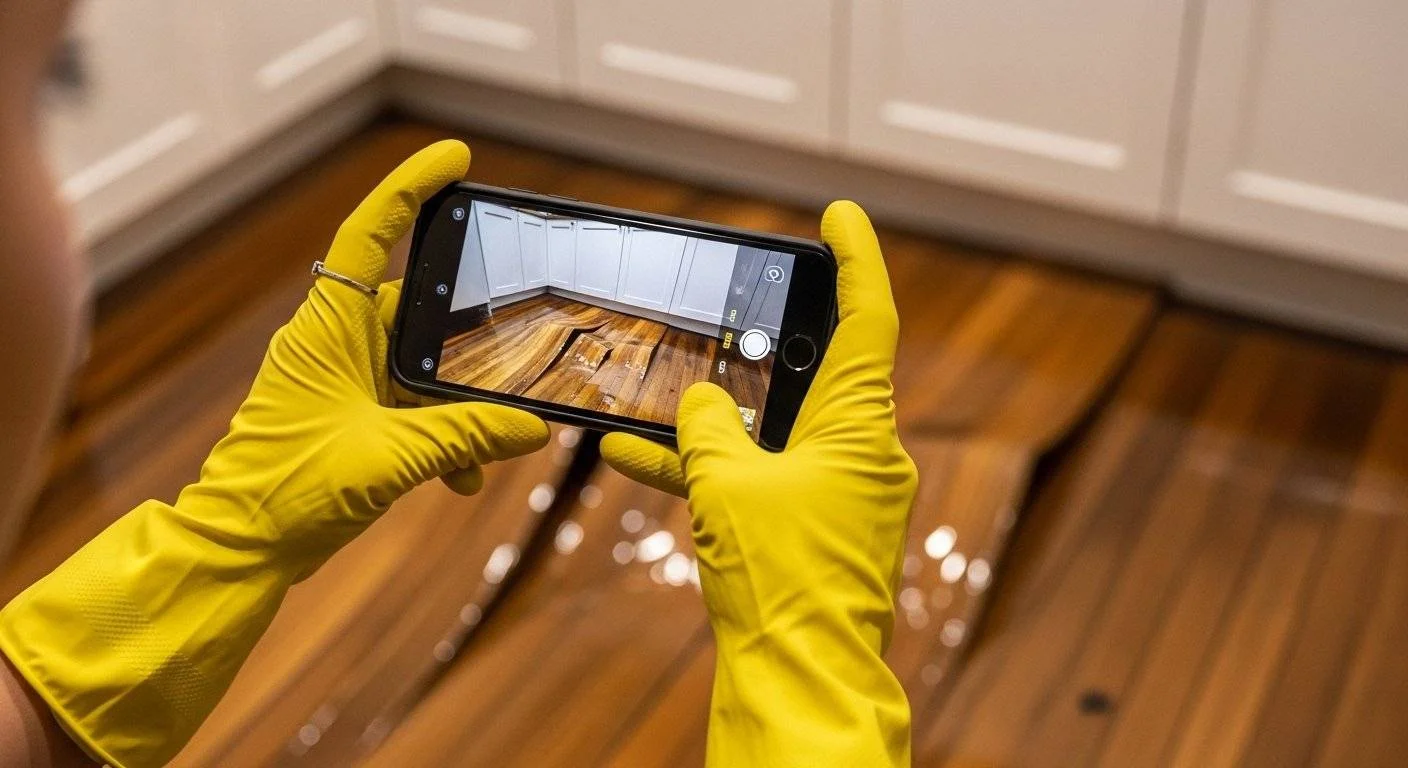
The single most expensive mistake homeowners make in the first hour is starting cleanup before documenting the damage. Once you start moving furniture, pulling carpet, or discarding damaged items, the evidence that supports your insurance claim is gone.
Walk through the affected areas with your phone and capture full video – the waterline height on walls, saturation on floors, every item in contact with water, and the source location. Follow with still photographs. Note the exact time you discovered the damage. If you are unsure what to look for beyond the obvious, our breakdown of common signs of water damage covers the less visible indicators that affect your claim. An adjuster who was not present needs to see what the situation looked like at discovery. Without that documentation, damaged areas and items that were cleaned up before inspection may receive no coverage.
Understand the Category of Water You Are Dealing With
The type of water determines your risk level and your immediate options entirely.
Category 1 is clean water from a sanitary supply source – a broken supply line, an overflowing sink, or a leaking appliance hose. No immediate health risk. Category 2 is gray water with some contamination – dishwasher overflow, washing machine drain backup, or water that has been sitting for several hours. Requires professional treatment. Category 3 is black water – raw sewage, outside floodwater, or any water that has been sitting untreated long enough to become grossly contaminated. It is a biohazard. Keep children, elderly family members, and pets out of the space entirely.
This matters in New York because combined sewer overflows – which push untreated sewage and stormwater back through basement drains during heavy rain – are extremely common in Queens, Brooklyn, and Nassau County. When it rains heavily and your basement flooding carries a sewage odor, assume Category 3 and treat it accordingly.
Call the Restoration Company First, Then Your Insurer
Most homeowners reverse this, which is understandable. But restoration cannot wait for insurance guidance. Your insurer’s adjuster may take days to arrive. Meanwhile, your policy’s duty-to-mitigate clause requires you to begin preventing further damage immediately. If mold develops while you wait for the adjuster, the insurer can deny coverage for that damage as preventable.
Call the restoration company first. Document in real time. Then notify your insurer while the team is already working. Our water damage restoration service covers everything from initial extraction and moisture mapping through full structural drying and reconstruction. For co-op and condo owners, also notify building management in writing – by text or email with a timestamp – at the same moment. Your proprietary lease defines where the building’s liability ends and yours begins, and that written notification creates the record needed to sort out multi-party claims.

The 24-to-48-Hour Mold Window Is Real
When building materials remain saturated above a threshold moisture level, mold spores begin colonizing those surfaces. The EPA identifies 24 to 48 hours as the point at which professional drying must begin to prevent mold from establishing. Once mold is actively growing, the project scope expands to include full certified remediation – adding $3,000 to $10,000 and several additional days.
New York properties have factors that accelerate this timeline. Summer humidity means indoor relative humidity is already elevated before the event, shortening the germination window. Pre-war buildings throughout Harlem, Crown Heights, and Bay Ridge contain horsehair plaster and old-growth wood framing that are efficient mold substrates. Dense construction creates cavities where moisture concentrates and lingers long after visible surfaces appear dry. Our guide on how quickly mold grows after water damage breaks down the timeline in detail.
Frequently Asked Questions
Does homeowners insurance cover water damage in New York?
Standard policies cover sudden and accidental water damage from internal sources – burst pipes, appliance failures, accidental overflows. They exclude gradual leaks, outside flooding, and sewage backup without a separate endorsement. The sewer backup endorsement costs $50 to $250 annually and most homeowners discover they do not have it after their first sewage event. NYC co-op owners should review their proprietary lease to understand where the building’s master policy ends and their individual HO-6 begins.
Should I wait for an insurance adjuster before starting restoration?
No. Your policy’s duty-to-mitigate clause requires you to act immediately to prevent further damage after a covered loss. Waiting and allowing mold to develop gives the insurer grounds to deny coverage for that additional damage. Document the damage first, then start restoration. Notify your insurer while the team is already working – this sequence protects both your property and your claim.
Who should I call first – a plumber or a restoration company?
If water is still actively flowing from a source you cannot shut off, call both simultaneously. If the source has stopped, call the restoration company first. A plumber repairs the source. A restoration company addresses the resulting damage. These are two separate problems requiring two separate specialists, and neither can wait.
How much does water damage restoration cost in NYC?
Category 1 single-room damage caught within 12 hours typically runs $1,500 to $4,000 in the NYC and Nassau County market. Multi-room moderate damage runs $4,000 to $12,000 before reconstruction. Category 3 sewage or flood damage in a finished basement starts around $8,000 and scales with scope and response delay. For a detailed cost breakdown specific to this market, see our water damage restoration cost guide.
Golden Touch Restoration Specialist provides 24/7 emergency water damage response across all five NYC boroughs and Nassau County, including water damage restoration in Great Neck and the surrounding North Shore communities. Thirty-minute guaranteed response. Call (347) 551-8094.Related reading: how long water damage restoration takes in NYC, ceiling water damage signs, how water extraction works, water mitigation vs. remediation vs. restoration, how to choose a water damage restoration company and our Elmont, NY location.>