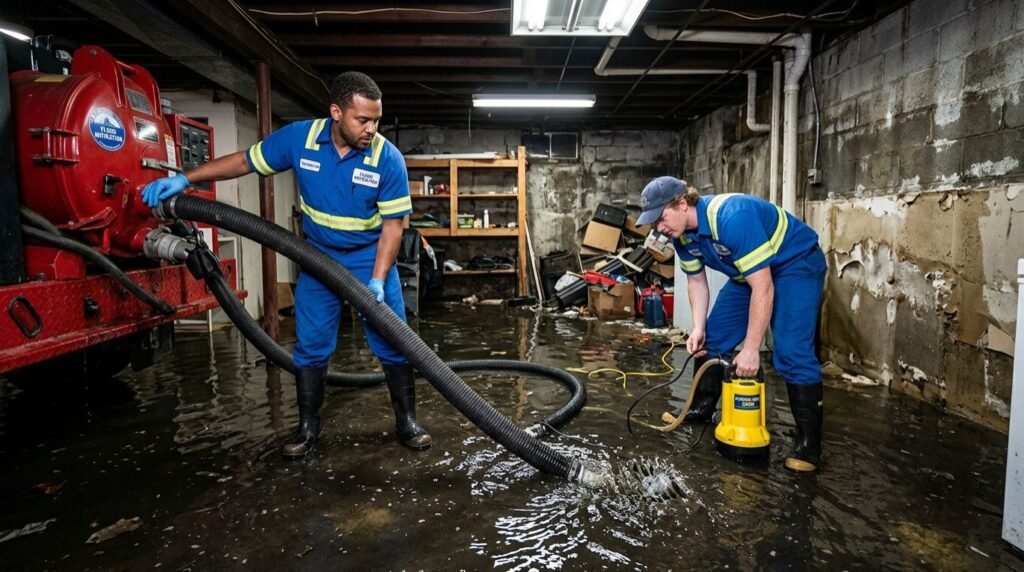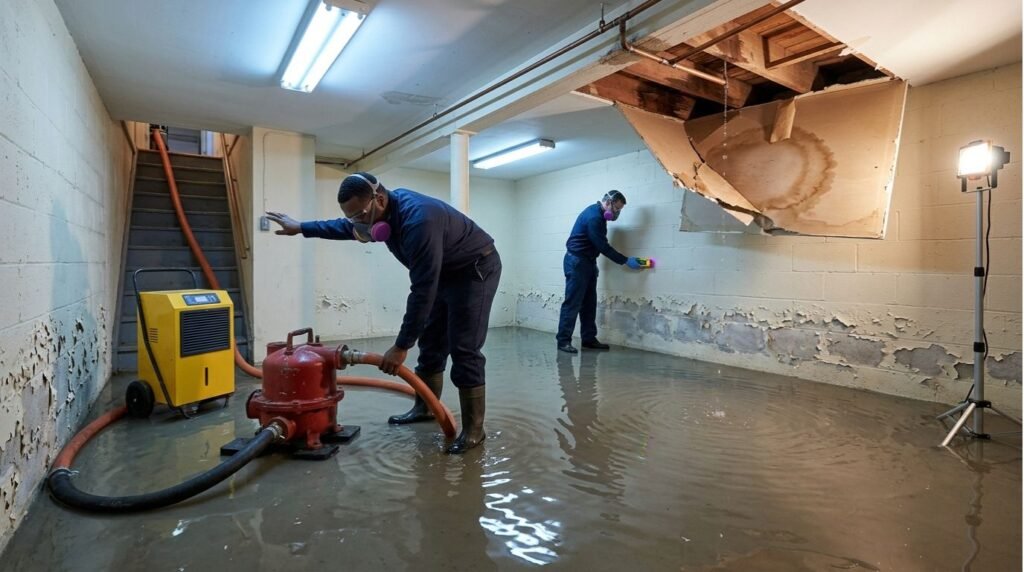
It’s 1:30 in the morning in Flushing, Queens. A supply line behind the wall has failed. Water is running down the inside of a pre-war plaster wall, soaking the subfloor, and pooling in the finished basement below. By the time the homeowner smells something wrong and finds the source, the water has been sitting for two hours.
In that moment, most people search for “water damage restoration” and assume one call handles everything. The reality is more specific, and understanding it protects your property and your insurance claim.
Water mitigation, water remediation, and water damage restoration are three separate phases of the recovery process. Each has a distinct goal. Each must be done in sequence. Confusing them means you might not know what you paid for, what to tell your adjuster, or whether the job was done correctly.
Golden Touch Restoration Specialist handles all three phases across all five NYC boroughs and Nassau County. The team is on-site within 30 minutes, 24/7/365.
What Is Water Mitigation, And Why Does It Always Come First?
Water mitigation is the emergency first response. Its only goal is to stop the damage from spreading. Nothing is repaired or rebuilt at this stage.
When a pipe bursts in a Woodside two-family home or a sump pump fails in an Elmont basement, water moves fast. It soaks into floors, walls, and framing within minutes. In older NYC buildings, including pre-war NYC buildings, brownstone construction, and shared wall cavities in co-ops, water reaches insulation inside a wall cavity in under an hour. Mold can begin developing within 24 to 48 hours. Mitigation stops that clock.
What a mitigation team does:
- Shuts off the water source, including supply lines, roof breaches, or exterior openings
- Extracts standing water using industrial pumps and commercial vacuums
- Sets up containment barriers and negative air pressure to prevent contamination from spreading
- Places commercial air movers and dehumidifiers to begin structural drying
- Documents all affected areas with moisture readings and photos for the insurance claim
Think of mitigation as triage. You stop the bleeding before you stitch the wound. A team that arrives within 30 minutes, as Golden Touch guarantees, gives a Brooklyn brownstone or a Jackson Heights apartment the best chance at a clean, contained outcome.
What Is Water Remediation, And How Is It Different from Mitigation?
Once the water source is controlled and the affected area is stabilized, remediation begins. This phase deals with everything the water left behind.
Water remediation means cleaning, sanitizing, and removing building materials that absorbed contaminated water. It also covers mold, bacteria, and any biohazard-level contamination from floodwater or sewage backup.
| Phase | What It Does | End Result |
|---|---|---|
| Mitigation | Stops the damage from spreading | Property is stabilized |
| Remediation | Removes what cannot be saved | Property is clean and safe |
| Restoration | Rebuilds what was removed | Property is back to normal |
What remediation includes:
- Removing wet drywall, insulation, and flooring that absorbed Category 2 or Category 3 water
- Certified mold testing and mold removal using IICRC-standard methods
- Antimicrobial treatment on all affected surfaces
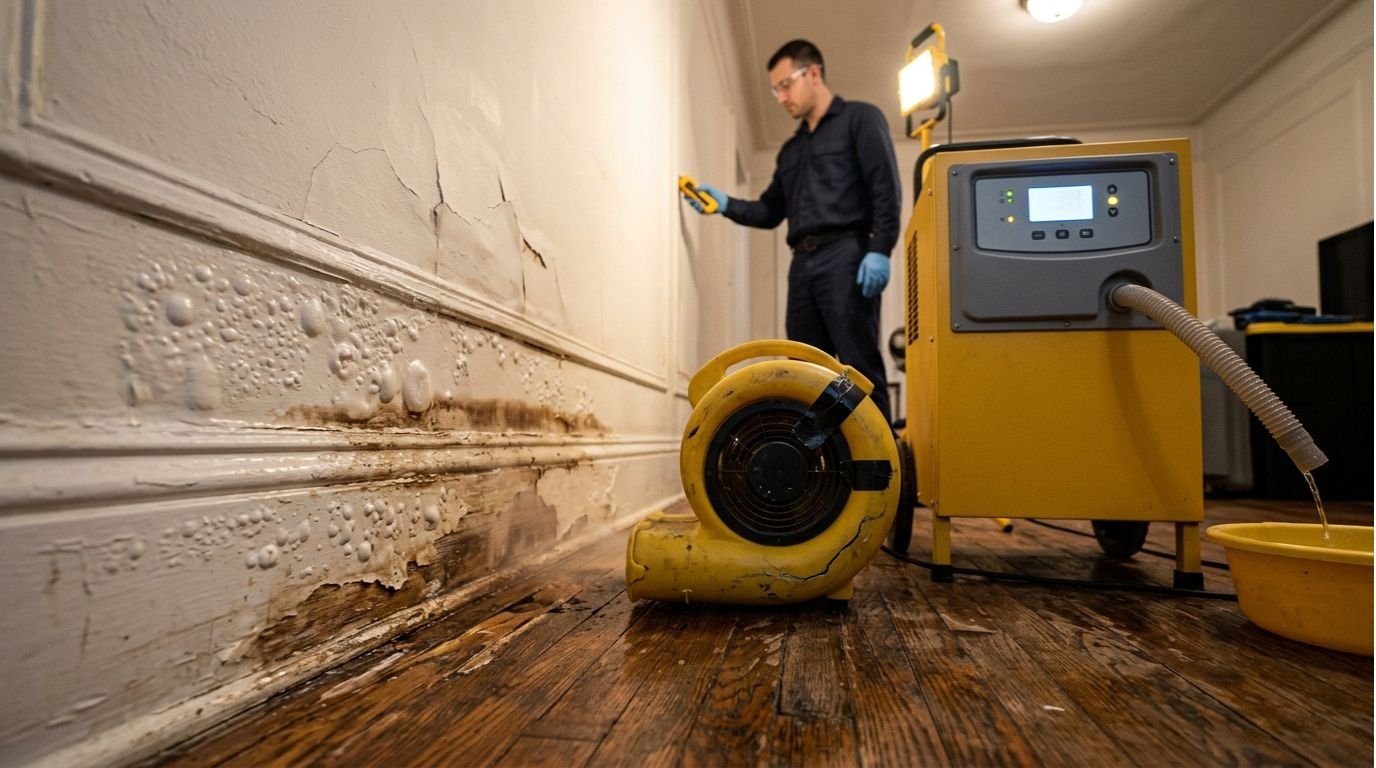
- Structural drying with commercial dehumidifiers and air movers, tracked with daily moisture readings
- Air quality testing when sewage or stormwater flooding was involved
- Safe disposal of biohazard materials under proper protocols
In NYC, street flooding and combined sewer overflows during heavy rain are classified as Category 3 water, a biohazard. Basement raw sewage cleanup in older Queens or Bronx housing stock requires certified professionals with proper containment and disposal protocols. A general contractor is not equipped for this work. Curious how a few simple habits can stop a small spark from becoming a house fire? Here are proven fire damage prevention tips every homeowner should know.
If water sat for more than 24 to 48 hours before a team arrived, mold is likely present, even if you cannot see it. Mold remediation involves containment, HEPA filtration, physical removal, and post-treatment air testing. Mold inside walls spreads through HVAC systems and creates serious health risks for building occupants. For a closer look at the difference between mold removal and remediation, see our post on mold removal vs. mold remediation.
What Does Water Damage Restoration Include?
Restoration is the final phase. This is where the property returns to normal.
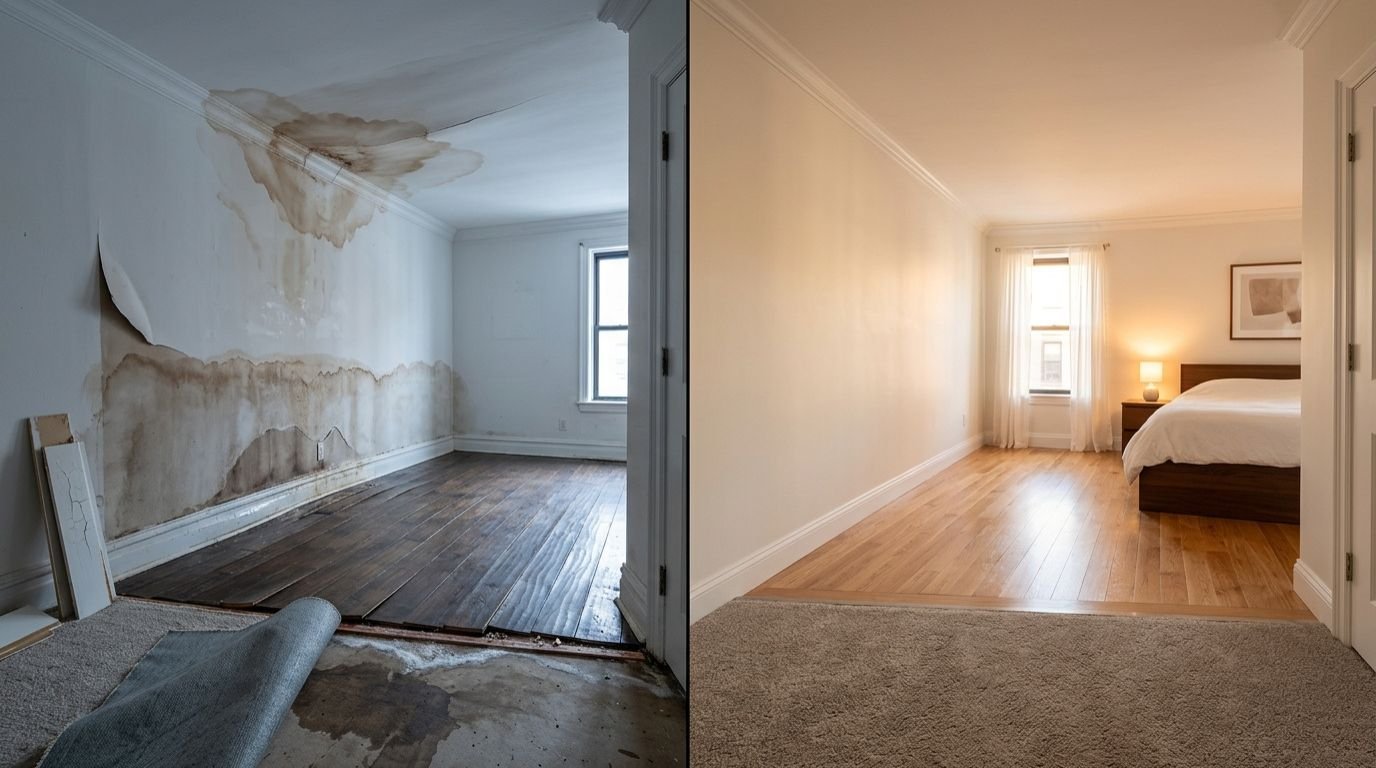
Water damage restoration covers all repair and reconstruction work after mitigation and remediation are complete. The goal is to return the property to pre-loss condition.
What restoration covers:
- Replacing drywall and finishing surfaces
- Installing new flooring, including hardwood, tile, carpet, or laminate
- Repainting walls and ceilings
- Repairing structural framing, subfloor, or floor joists when needed
- Reinstalling fixtures and cabinetry
- Cleaning and restoring air ducts
- Final moisture verification and documentation before closing the job
Restoration should never begin until remediation is fully complete. Building over wet or mold-affected materials guarantees the problem returns, at a higher cost.
In older New York buildings, including pre-war walkups in the Bronx, cast-iron plumbed row houses in Flatbush, and co-ops in Forest Hills, restoration often uncovers pre-existing issues. Outdated plumbing, failing vapor barriers, and existing moisture damage are common finds. A thorough restoration team addresses all of it, not just the visible damage from the most recent event. Not all restoration companies are created equal before you hire one, find out exactly how to choose a water damage restoration company you can trust.
For a detailed breakdown of what water damage restoration services cover, including response timelines and what to do before help arrives, see our main service page.
How Do All Three Phases Work Together in a Real NYC Emergency?
Here is what the full process looks like in practice.
A property owner in Crown Heights, Brooklyn returned home on a Sunday evening to find water had spread from a failed supply line through two bathroom walls and into the bedroom below. The flooring was soaked and a section of ceiling drywall had collapsed.
Night of the event: Golden Touch arrived within 30 minutes of the call. Standing water was extracted. Industrial air movers and dehumidifiers were placed. Containment was set up to protect the adjacent rooms.
Days 1 to 5: Moisture readings were taken daily. Affected drywall and saturated insulation were removed. Antimicrobial treatment was applied. Remediation continued until all surfaces cleared.
End of week 1: Remediation complete. Post-treatment testing confirmed the area was clean and dry.
Week 2: Restoration finished. New drywall, paint, and flooring were installed. The unit was returned to pre-loss condition.
The insurance claim was fully supported because every phase was documented continuously, with moisture readings, photos, and a written scope at each stage. When one team handles all three phases, that documentation is seamless. When separate contractors each take a phase, gaps appear and claims get disputed.
What Mistakes Do NYC Property Owners Make After Water Damage?
Waiting too long to call. Consumer fans and towels cannot reach moisture inside wall cavities or under subfloors. By the time the surface looks dry, mold may already be growing behind it. Every hour of delay increases the restoration cost and the health risk. Our guide on first 24 hours after water damage walks through exactly what to do while waiting for professional help.
Calling a general contractor instead of a certified restoration company. General contractors renovate. Restoration requires IICRC certification, commercial drying equipment, and containment protocols. Pulling wet drywall without proper containment spreads mold spores throughout a building. In a shared-wall Brooklyn brownstone or a Harlem co-op, that becomes a building-wide problem.
Not documenting for the insurance claim. Every phase needs moisture readings, photos, and a written scope. One team managing all three phases produces connected documentation. Separate contractors leave gaps that adjusters use to reduce payouts.
Assuming mold is absent because the surface looks dry. In neighborhoods with older housing stock and aging plumbing, including the Bronx, Harlem, East Flatbush, and parts of Staten Island, mold often exists before a water event. The post-damage environment accelerates existing growth dramatically. Knowing the signs of hidden water damage before and after an event can save significant time and money.
Not understanding flood damage vs. pipe damage. FEMA-designated flood zones cover significant portions of coastal Queens, Staten Island, and Southern Brooklyn. Floodwater and pipe water are treated differently under most insurance policies. Knowing which event you are dealing with affects your claim from the first phone call.
Why Do NYC and Long Island Property Owners Trust Golden Touch for Water Damage?
Golden Touch Restoration Specialist has completed over 2,500 restoration projects across all five NYC boroughs and Nassau County communities including Elmont, Floral Park, Franklin Square, Valley Stream, and South Floral Park. Every technician is IICRC-certified. The team handles all three phases, mitigation, remediation, and restoration, with direct insurance coordination included.
- 30-minute on-site emergency response, 24/7/365 including holidays
- Full-phase service from mitigation through final restoration
- IICRC-certified technicians trained in water, mold, sewage, fire, and biohazard restoration
- Direct insurance coordination, so you do not have to manage the process yourself
- 99% client satisfaction rate across 89+ verified Google reviews
- Coverage across all five NYC boroughs, Nassau County, and Long Island communities from our Elmont, NY base (zip code 11003)
When you call (347) 551-8094, you reach the team directly. No call centers. No handoffs.
Frequently Asked Questions About Water Damage in New York
Is water remediation the same as water damage restoration?
No. Remediation removes contaminated or damaged materials and makes the property structurally safe. Restoration repairs and rebuilds what was removed. Both are typically needed after any significant water event, but they happen in sequence. Remediation must be complete before restoration begins.
Do I need all three phases after a burst pipe?
In most cases, yes. Even clean water from a supply line can cause mold if it sat long enough or spread into wall cavities. Professional extraction, structural drying, and moisture verification are required before any reconstruction begins. Skipping remediation and going straight to rebuilding is the most expensive mistake property owners make.
How do I know if there is hidden moisture in my walls?
A certified technician uses calibrated moisture meters and thermal imaging cameras. You cannot confirm hidden moisture with a visual inspection. If you managed the initial event yourself with fans and towels, there is a good chance residual moisture remains in wall cavities, subfloors, or insulation. The EPA’s guidance on mold and moisture in buildings explains why professional verification matters: EPA Mold and Moisture Resource.
Does homeowner’s insurance cover all three phases?
Most policies cover mitigation, remediation, and restoration for sudden, accidental water damage events. Gradual leaks and deferred maintenance are typically excluded. Proper documentation at each phase is what gets claims paid in full. FEMA’s National Flood Insurance Program covers flood events separately from standard homeowner’s policies: FEMA Flood Insurance.
How long does the full water damage process take?
For most residential water damage events in NYC, the timeline runs seven to fourteen days from mitigation through restoration completion. Larger events, such as extensive flooding in a two-family home in Jamaica, Queens, or commercial water damage in a Crown Heights mixed-use building, can run three to four weeks. The key variable is how long the water sat before extraction began. For a detailed breakdown by damage type, see our guide on NYC water damage restoration timelines.
What is Category 3 water and why does it matter in NYC?
Category 3 water is contaminated water from sewage backup, combined sewer overflow, or stormwater flooding. It carries bacteria, pathogens, and biohazard risk. In NYC, heavy rain regularly causes combined sewer overflow events in older borough neighborhoods. Category 3 water requires biohazard-level cleanup, including full protective gear, antimicrobial treatment, and safe material disposal. Standard cleaning products and general contractors cannot handle it safely. Our emergency sewage cleanup guide covers what the full response process involves.
Water damage in NYC rarely announces itself at a convenient time. A failed supply line, a storm-driven basement flood, a sewage overflow on a holiday weekend. Any of these events starts a clock that runs in your property’s favor or against it, depending on how fast the right team gets there. Now that you understand what mitigation, remediation, and restoration each cover, you know what to ask for and what to expect. The next step is a phone call.
Need Water Damage Help in NYC or Long Island? We Respond in 30 Minutes.
Water damage worsens every hour it sits. Mold starts developing within 24 to 48 hours. The gap between a contained loss and a major structural event is often measured in hours, not days.
Do not wait to find out which phase you need. One call covers everything.
Call Now: (347) 551-8094 | Available 24/7/365
Free consultation. No obligation. Serving Queens, Brooklyn, Manhattan, The Bronx, Staten Island, Elmont, Floral Park, Franklin Square, Valley Stream, and all surrounding Nassau County communities.
Trust Signals: 99% Satisfaction Rate | 2,500+ Projects | All 5 NYC Boroughs