
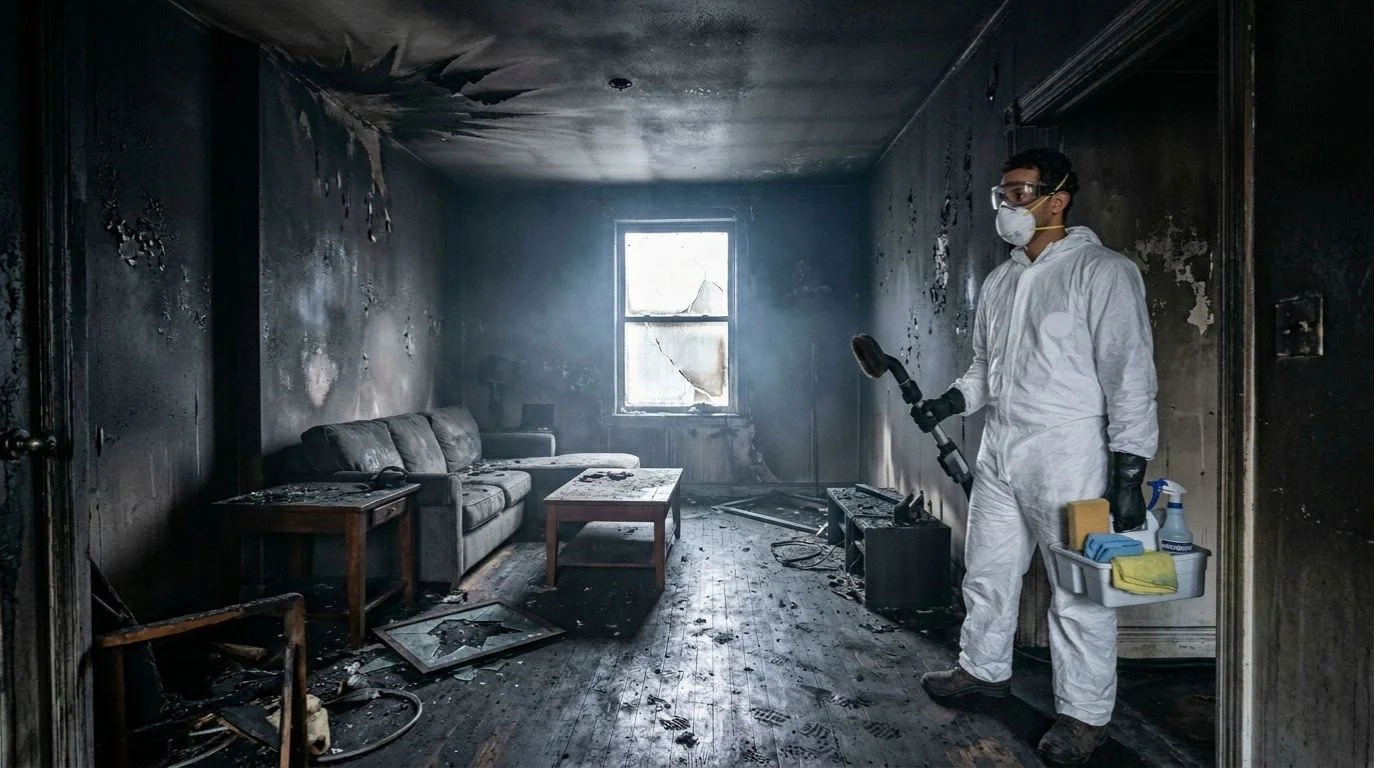
After a fire, the flames are only part of the damage. What stays behind is a layer of black, oily soot coating your walls, ceilings, and furniture. That soot carries toxins and acidic compounds that keep causing damage long after the fire is out. Leave it untreated for even a few days and it etches into surfaces, stains permanently, and contaminates the air in your home.
Cleaning soot off walls, ceilings, and furniture requires the right tools and the right technique. Not all soot is the same. Using the wrong method pushes soot deeper into porous surfaces and makes the damage worse.
Golden Touch Restoration Specialist serves New York homeowners and businesses recovering from fire damage. This guide walks you through exactly what to do, what to avoid, and when to call a professional.
Here is what this guide covers:
- The difference between soot types and why it matters
- Safety steps before any cleaning begins
- Step-by-step methods for walls, ceilings, and furniture
- Which surfaces need professional restoration
- Common mistakes that increase repair costs
What Is Soot and Why Is It Dangerous?
Soot forms when materials burn without enough oxygen. The particles bond with oils and chemicals in the smoke, then land on every surface in the room.
Fire damage restoration professionals classify soot into three types. Dry soot is light and powdery, left behind by fast, hot fires burning natural materials like wood. Wet soot is thick and sticky, produced by slow smoldering fires, and smears badly if you wipe it without the right solution. Protein soot is nearly invisible but extremely foul-smelling. It comes from burning food or grease and is the hardest type to remove. For a full breakdown of how fire damage causes and what restoration involves, see our dedicated guide.
Soot is not just a stain. It contains heavy metals, acidic particles, and harmful gases. It irritates the lungs, corrodes metal, breaks down fabric, and etches into paint. Most restoration experts say permanent surface damage begins within 24 to 72 hours of the fire. The NFPA fire safety guidelines document why immediate response after fire events matters.
What Safety Precautions Should You Take Before Cleaning Soot?
Do not re-enter a fire-damaged property until the fire department confirms it is structurally safe.
Once you have clearance, gear up properly. Wear an N95 or P100 respirator, safety goggles, heavy rubber gloves, and old clothing or disposable coveralls. Soot contains compounds that harm your lungs and skin on contact. OSHA fire safety standards outline the minimum protective equipment required before entering a soot-affected space.
Open all windows and doors before you begin. Good airflow reduces the concentration of airborne particles while you work. Then turn off the HVAC system completely. Running it spreads soot through the ductwork into rooms that were never touched by the fire. If soot has entered your duct system, professional air duct cleaning is required before the system is turned back on.
Lay plastic sheeting over floors in adjoining rooms so you do not track soot through the house. Do not use water near electrical outlets or panels until a licensed electrician confirms the wiring is safe. After a serious fire event, securing the property with emergency board-up services protects it from further exposure while cleanup proceeds.
How to Clean Soot Off Walls Step by Step
The method below works for most painted drywall surfaces. You will need a HEPA vacuum, a dry chemical sponge, trisodium phosphate (TSP), warm water, and clean cloths.
Step 1: Vacuum first. Use a HEPA vacuum with a soft brush attachment. Work from the top of the wall downward. Do not press hard. Gentle suction pulls the dry particles off without smearing them. A regular vacuum without HEPA filtration blows soot back into the air.
Step 2: Use a dry cleaning sponge. A dry chemical sponge is made of vulcanized rubber and lifts soot like an eraser. Use long strokes from top to bottom. Fold or flip the sponge as it picks up soot. Never dampen it. A wet sponge smears instead of lifts.
Step 3: Apply a TSP solution. Mix one tablespoon of TSP per gallon of warm water. Dampen a cloth with the solution and wipe in long, even strokes. Work in small sections and rinse the cloth often. For greasy or wet soot, use a commercial degreaser instead.
Step 4: Rinse and dry. Wipe each section with a plain damp cloth to remove cleaner residue. Let the wall dry fully before moving on. Use fans to speed it up.
Step 5: Prime before painting. Use a stain-blocking primer rated for smoke damage cleanup. Regular paint primer will not stop soot stains from bleeding through after repainting.

How to Clean Soot Off Ceilings
Always clean the ceiling before the walls. Soot and cleaning solution drip downward, and you do not want residue falling onto a wall you already cleaned.
Use the same dry sponge method described above. Attach the sponge to a long-handled extension pole so you are not pressing your face directly into the soot. Work in sections and fold the sponge as it gets dirty.
When you move to wet cleaning, wring the cloth out as much as possible. You want the ceiling surface damp, not soaked. Too much water weakens drywall and can cause sagging. It also creates moisture that leads to mold within 24 to 48 hours in humid New York conditions.
For textured or popcorn ceilings, skip the wet cleaning altogether. Those surfaces break apart when wet. HEPA vacuuming followed by dry sponging is the safest approach. Heavy soot on textured ceilings usually requires professional resurfacing. Mold often hides in places you’d never think to check learn how to find hidden mold in your home before it spreads.
How to Clean Soot Off Furniture
Different materials need different approaches.
Wood furniture: Vacuum first with a HEPA vacuum, then use a dry sponge on the surface. After that, wipe with a cloth lightly dampened with dish soap and warm water. Dry immediately. Moisture left on wood causes warping.
Upholstered furniture: Vacuum gently, then use a dry sponge on the fabric. Do not scrub. For smoke odor removal, sprinkle baking soda over the surface, leave it for a few hours, then vacuum it off. If the smell is still strong after that, professional upholstery cleaning is the next step.
Leather furniture: Wipe with a dry microfiber cloth first. Then use a leather-safe cleaner and follow with a conditioner. Keep water away from leather surfaces.
Metal furniture: Clean with a degreaser and a stiff brush. Dry the surface right away. Soot is acidic and starts corroding metal quickly, so speed matters here.

Which Surfaces Require Professional Fire Damage Restoration?
Some materials cannot be safely cleaned without professional equipment.
- HVAC ducts: Soot travels through ductwork into every room. Running your system after a fire spreads contamination further. Ducts must be professionally cleaned before you turn the system back on. See our air duct cleaning service for what this process involves.
- Insulation: If smoke reached inside wall or ceiling cavities, the insulation absorbed it. That material needs to be removed and replaced, not cleaned.
- Porous stone: Marble, granite, and natural stone absorb soot below the surface. Standard cleaners damage the material. Professional stone restoration compounds are required.
- Structural framing: Visible fire damage to wood joists or framing requires a structural assessment before any work begins. Our fire damage restoration team handles structural assessment as part of the initial evaluation.
- Electronics: Soot is electrically conductive. Do not power on any device exposed to smoke until a technician has inspected and cleaned it.
What Are the Most Common Soot Cleaning Mistakes to Avoid?
- Using a regular vacuum. Standard vacuums blow soot particles back into the air. Only use a HEPA-rated vacuum.
- Wiping before vacuuming. If you skip the dry removal step and go straight to wiping, you push soot deeper into the surface. Always vacuum or dry-sponge first.
- Using the wrong cleaner. Vinegar and acidic cleaners react badly with soot and can worsen staining. Stick with TSP or a commercial degreaser.
- Too much water on ceilings and walls. Overwetting causes secondary water damage and mold. Use a damp cloth, not a soaked one.
- Skipping stain-blocking primer. Painting directly over soot without the right primer means the stain bleeds through within weeks.
- Ignoring smoke odor. Visible soot and smoke odor are two separate problems. Cleaning the surfaces does not remove odor trapped inside walls, insulation, and ductwork. Ozone treatment or thermal fogging by a professional handles that.
- Waiting too long. The first 48 hours matter most. After that, staining deepens, metal starts to corrode, and restoration becomes significantly harder and more expensive. Review our house fire recovery checklist to make sure nothing critical is missed in the first 48 hours.
Why Do New York Property Owners Trust Golden Touch for Fire Damage Cleanup?
Fire damage moves fast. You need a team that moves faster.
- IICRC-certified restoration. We follow Institute of Inspection, Cleaning and Restoration Certification standards on every job, from soot cleaning to structural drying.
- Fast response across New York. We serve residential and commercial clients with same-day assessment availability, including after hours.
- Complete restoration under one roof. Soot cleaning, duct cleaning, odor neutralization, and structural repairs. No need to manage multiple contractors.
- Insurance documentation support. We provide written assessments, photos, and itemized reports from day one to support your claim.
- Honest assessment, no pressure. We tell you exactly what needs professional attention and what you can handle yourself.
We have restored fire-damaged properties across New York that others wrote off as a total loss. See our fire damage prevention tips to share with your building management after an incident.
Frequently Asked Questions About Soot Cleanup in New York
How soon should I start cleaning soot after a fire?
Start as soon as the fire department clears the property as safe. Permanent staining can begin within 24 to 48 hours, and metal surfaces start corroding within 72 hours. Refer to our house fire recovery checklist for the exact sequence of actions to take from the first hour onward.
Can I use regular household cleaners to remove soot?
Most are not strong enough, and some like vinegar make it worse. Use trisodium phosphate (TSP) or a commercial degreaser for reliable results.
Does cleaning soot also remove smoke odor?
Cleaning removes the physical residue but not the odor trapped inside walls, insulation, and ductwork. Deep-set smoke odor requires professional ozone treatment or thermal fogging.
Is soot dangerous to touch or inhale?
Yes. Soot contains carcinogenic compounds and acidic particles that harm lungs and skin. Always wear an N95 respirator, rubber gloves, and eye protection before entering a soot-affected area.
When should I call a professional instead of cleaning soot myself?
Call a professional when the damage covers more than one or two rooms, when synthetic materials burned, or when smoke reached inside walls or ductwork. Any structural or electrical involvement also requires a certified contractor. Golden Touch Restoration Specialist offers free assessments for fire-damaged properties across New York.
Soot does not wait for a convenient time to cause permanent damage. The first 72 hours after a fire determine how much of your property can be saved. Following the right sequence – dry removal first, wet cleaning second, and sealed primer before paint – keeps the restoration scope manageable. When the damage extends beyond what a homeowner can safely handle, certified help is the right call.
Golden Touch Restoration Specialist is here for New York homeowners when it matters most. Call us today or visit goldentouchrestorationspecialist.com to schedule your free fire damage assessment.
Dealing With Fire Damage in NYC or Long Island? We Respond the Same Day.
Water damage does not wait, and neither should you. Every hour without professional response increases repair costs and health risk. One call reaches a certified team that can be at your door within 30 minutes.
Do not wait to find out how bad it is. Reach out now for your free consultation.
Call Now: (347) 551-8094 | Available 24/7/365
Free consultation. No obligation. Serving Queens, Brooklyn, Manhattan, The Bronx, Staten Island, Elmont, Floral Park, Franklin Square, Valley Stream, and all surrounding Nassau County communities.
Trust Signals: 99% Satisfaction Rate | 2,500+ Projects | All 5 NYC Boroughs


