
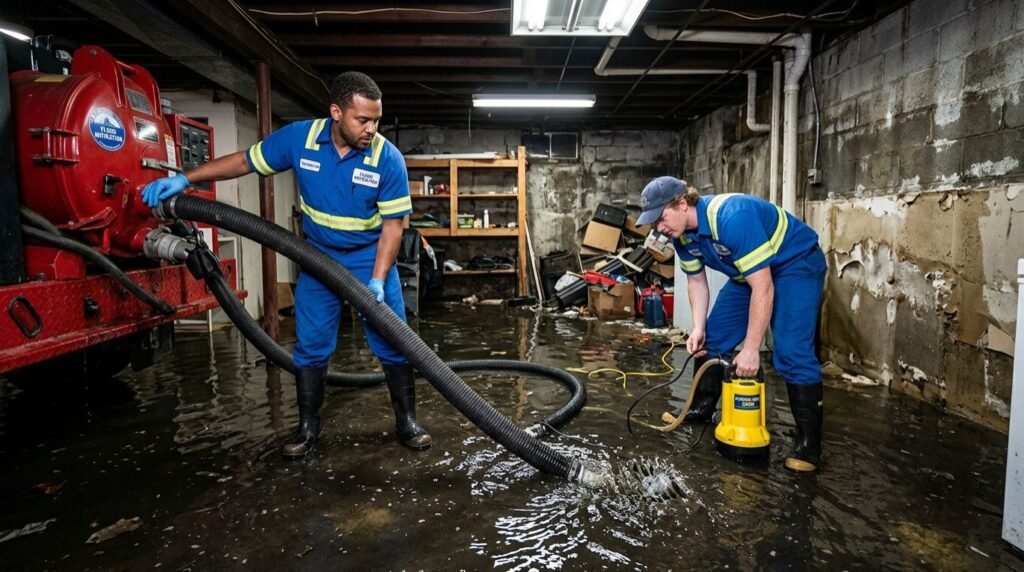
Water damage moves fast. The moment a pipe bursts or a basement floods, moisture starts spreading into walls, floors, and building materials. Within 24 to 48 hours, mold can begin to grow. The quicker the water is removed, the less damage your property takes.
Water extraction is the first and most important step in water damage restoration. It is not just mopping up puddles. It is a structured process that removes water from surfaces and hidden areas that regular vacuums and fans cannot reach.
Here is what this guide covers:
- What professional water extraction actually is
- Why acting fast makes a real difference
- Every step of the process, from assessment to final drying
- What equipment professionals use
- How professional service compares to DIY cleanup
At Golden Touch Restoration Specialist, we have handled over 2,500 restoration projects across all five NYC boroughs and Nassau County. This guide reflects how our certified technicians approach every water extraction job.
What Is Professional Water Extraction?
Professional water extraction is the controlled removal of standing and absorbed water after a flood, leak, burst pipe, or storm. It uses industrial equipment to pull water out of floors, walls, and materials that household tools simply cannot handle.
Water does not stay in one place. It seeps through flooring gaps, travels along wall cavities, and soaks into insulation and drywall. By the time the visible puddle is gone, moisture may have already spread several feet in every direction.
If that moisture is not fully removed, two things happen. Structural materials like wood and drywall start to weaken and rot. And mold begins to grow, often inside walls where you cannot see it. In New York’s humid climate, mold can establish itself within 24 to 48 hours. Curious how a few simple habits can stop a small spark from becoming a house fire? Here are proven fire damage prevention tips every homeowner should know.
Professional extraction, done quickly and correctly, prevents both problems. Not all restoration companies are created equal before you hire one, find out exactly how to choose a water damage restoration company you can trust.
Step 1: What Happens During the Safety Check and Initial Assessment?
Before any equipment is used, a certified technician assesses the situation. This step protects both the team and your property.
The first concern is electrical safety. Water near live electrical systems is dangerous. Power to affected areas is confirmed off before work begins.
Next, the water source is identified and stopped. If water is still entering the property, extraction cannot be effective. That means shutting off the main water supply, locating a roof breach, or confirming a storm drain has stopped backing up.
The technician also determines the water category. This matters for safety and sanitation.
- Category 1 is clean water from supply lines or rain.
- Category 2 (gray water) comes from sources like washing machines or dishwashers and may contain mild contaminants.
- Category 3 (black water) includes sewage backups and outdoor floodwater. This is heavily contaminated and requires full protective equipment and sanitation protocols.
Finally, moisture meters and thermal imaging cameras are used to map how far the water has spread beyond what is visible. This prevents incomplete extraction, which is one of the top causes of mold growth after a water event.
Step 2: How Is Moisture Mapped Before Extraction Begins?
What you see is rarely the full picture.
Wet carpet or a flooded basement shows you where water started. It does not show you where it went. Water moves through flooring seams, along pipes, and deep into wall cavities.
Two tools are used to find hidden moisture.
Moisture meters measure the moisture content inside materials like drywall, wood, and concrete. A reading above the safe threshold flags that material for extraction and drying.
Thermal imaging cameras show temperature differences across surfaces. Wet areas cool differently than dry ones. This lets technicians spot moisture behind walls or under floors without cutting into every surface.
All readings are documented. This creates a record that is useful for your insurance claim and confirms that every affected area is treated.

Step 3: How Is Standing Water Removed?
This is where the heavy equipment comes in.
For large volumes of water, truck-mounted extraction units do the work. These industrial vacuums are mounted in a restoration vehicle and can remove thousands of gallons per hour. They are far more powerful than any portable unit.
For upper floors, smaller rooms, or tight spaces, portable industrial extractors are used. In basements with several inches of standing water, submersible pumps are placed directly in the water and move it out through a discharge hose.
Technicians work methodically, moving from the highest water concentration toward the drainage point. This prevents water from being pushed back into cleared areas. Carpet padding is almost always removed at this stage because it absorbs a large amount of water and cannot be effectively dried in place.
Step 4: How Is Deep Moisture Extracted from Floors and Walls?
After standing water is gone, a second pass removes moisture that has soaked into materials.
Weighted extraction tools press down on carpeting while vacuuming, forcing water out of the fibers. For hardwood floors, specialized floor mats apply suction across the surface to draw moisture out before it causes cupping or warping. Tile floors may look dry on top while the subfloor underneath is still saturated. Moisture meters confirm the real condition.
For walls, technicians may drill small access holes at the base of drywall. This lets extraction tools reach inside wall cavities where water gets trapped. Leaving moisture sealed inside a wall almost always leads to mold, so this step is standard practice.
Step 5: What Does the Drying and Dehumidification Process Involve?
Extraction removes the bulk of the water. Drying removes what remains.
Air movers are high-velocity fans placed low to the ground. They push a concentrated stream of air directly across wet surfaces, speeding up evaporation.
Industrial dehumidifiers pull the evaporated moisture out of the air. As surfaces dry, humidity in the room rises. If that humid air is not removed, it settles back onto other surfaces and slows everything down. Dehumidifiers condense that moisture and push dry air back into the space.
Most residential drying jobs in New York take three to five days. A technician returns each day to check moisture readings and adjust equipment. If certain materials are not drying on schedule, drywall sections may be opened or additional equipment added.

Step 6: Why Is Sanitizing and Odor Treatment Necessary After Extraction?
Once moisture levels return to normal, the area is treated with antimicrobial and sanitizing agents.
This matters for any water damage job but becomes critical for gray water and black water events. These carry bacteria and pathogens that drying alone does not remove. Even after a clean water event, surfaces that stayed wet for more than 24 to 48 hours may already have microbial growth starting.
Antimicrobial products are applied to walls, floors, and structural surfaces that came into contact with water. If odor is present after sewage backups or prolonged flooding, odor neutralizers break down the compounds at the source rather than masking the smell. All products used by our team are EPA-compliant.
Step 7: What Happens During Final Verification and Documentation?
Before a job is closed, technicians run a final moisture survey across the entire affected area.
Every reading is compared to the baseline taken at the start. All materials must be within acceptable moisture ranges per the IICRC S500 Standard for Professional Water Damage Restoration. This final documentation confirms the work is complete and gives your insurance company a measurable record of both the damage and the remediation.
How Does Professional Water Extraction Compare to DIY Cleanup?
Many New York property owners try to manage water damage with a shop vacuum and household fans. For a very small, clean water spill on a hard surface, that may be enough. For anything more, it is not.
A household wet-dry vacuum holds a few gallons and lacks the suction to pull water from carpet padding or wall cavities. Industrial units move hundreds of gallons per hour. Household fans do not generate the airflow needed to dry saturated materials. Without a dehumidifier running at the same time, they just push humid air around the room.
Without moisture meters, there is no way to know if hidden areas are actually dry. A floor that feels dry to the touch may still have a saturated subfloor well above safe moisture levels.
Incomplete extraction leads to one predictable result. Mold grows inside walls and under floors, often undetected for weeks. What could have been a straightforward water extraction job becomes a combined water damage and mold remediation situation, which costs significantly more.
For anything beyond a minor surface spill, professional extraction is the right decision.
If you are dealing with water damage in New York City or Nassau County right now, Golden Touch Restoration Specialist is available 24 hours a day. Call (347) 551-8094 and we will be on site within 30 minutes.
Why Do NYC Property Owners Trust Golden Touch for Water Extraction?
We have served property owners across all five NYC boroughs and Nassau County for over 10 years.
- IICRC-certified technicians. Every technician is trained to the IICRC S500 standard and certified to handle all water damage categories.
- 30-minute response, 24/7. We deploy day and night, including weekends and all holidays.
- Truck-mounted industrial equipment. Commercial-grade units that outperform portable equipment on any significant water event.
- Daily drying monitoring. A technician checks readings and adjusts equipment every day until the job is complete.
- Direct insurance coordination. We document everything and work with your adjuster from start to finish.
- Free assessment, clear pricing. You know the cost before we start. No surprises.
Frequently Asked Questions About Water Extraction in New York
How long does water extraction take?
The extraction phase typically takes two to six hours depending on water volume and the size of the area. The drying process that follows takes three to five days in most residential situations.
Can professional extraction prevent mold?
Yes, when done quickly and completely. Mold needs moisture to grow. If all affected materials are dried to safe levels within 24 to 48 hours, the conditions for mold are removed.
Is water extraction covered by homeowners insurance in New York?
Sudden and accidental water damage such as a burst pipe is usually covered under a standard homeowners policy. Flooding from outside typically requires separate flood insurance. We work directly with your insurance company and help document your claim from the start.
What if some water was left behind?
Signs of water damage include musty odor, wall discoloration, and warping floors. Mold growth is likely within one to two weeks if moisture remains inside walls, floors, or cavities. A professional moisture check can detect hidden moisture before visible mold appears.
Do I need to leave my home during extraction?
For clean water events, most people can stay in the property. For contaminated water (Category 2 or 3), technicians may recommend temporarily staying out of certain areas until sanitation is complete.
Water extraction is a step-by-step process. It starts with a safety assessment, moves through standing water removal and deep material extraction, and finishes with controlled drying, sanitation, and full documentation. Every step matters because water damage compounds over time. The longer moisture sits inside walls and floors, the more it spreads and the greater the risk of mold.
Acting fast is the single most important factor. Calling a certified team within the first few hours gives your property the best chance of a full recovery with the least amount of damage.
Golden Touch Restoration Specialist is available 24 hours a day, 365 days a year, serving all five NYC boroughs and Nassau County. Call us at (347) 551-8094 or email restorationspecialistnyc@gmail.com. We will be on site within 30 minutes and ready to get started.
Need Emergency Water Extraction in NYC or Long Island? We Respond in 30 Minutes.
Water damage does not wait, and neither should you. Every hour without professional response increases repair costs and health risk. One call reaches a certified team that can be at your door within 30 minutes.
Do not wait to find out how bad it is. Reach out now for your free consultation.
Call Now: (347) 551-8094 | Available 24/7/365
Free consultation. No obligation. Serving Queens, Brooklyn, Manhattan, The Bronx, Staten Island, Elmont, Floral Park, Franklin Square, Valley Stream, and all surrounding Nassau County communities.
Trust Signals: 99% Satisfaction Rate | 2,500+ Projects | All 5 NYC Boroughs


