Most homeowners only think about mold when they can already see it. A dark spot on the bathroom tile. A fuzzy patch near a leaking pipe. But by the time mold is visible, it has usually been growing for weeks in places you cannot easily access.
Hidden mold grows behind drywall, under flooring, inside HVAC systems, and in crawl spaces. It spreads quietly until it causes structural damage or triggers health problems.
New York homes face higher risk than most. Older buildings, dense construction, aging plumbing, and humid summers create conditions where mold moves fast. In multifamily buildings, a slow leak in one unit can affect multiple floors before anyone notices. Understanding the signs of mold in walls before a problem becomes visible is the most effective way to keep remediation scope small.
Finding mold early is possible without special equipment. Knowing what to smell for, where to look, and when to call a professional can save you from a much larger problem down the road.
Here is what this guide will help you understand:
- The most reliable early signs of hidden mold
- Specific locations where mold hides most often
- How moisture patterns point to mold risk
- Health symptoms connected to mold exposure
- Testing and inspection methods that find mold without demolition
- How professional remediation works
Why Is Odor Often the First Warning Sign of Hidden Mold?
A persistent musty odor is the most reliable early indicator of hidden mold. You can smell mold long before you can see it.
Mold releases microbial volatile organic compounds, known as MVOCs, during its growth process. These produce a damp, earthy smell similar to a wet basement or old books. The odor builds up in enclosed spaces and gets stronger during humid periods.
A simple test: leave a room closed for a few hours, then walk in and take note of the air right away. If the smell is noticeable immediately and does not go away, there is likely an active source nearby.
In New York apartments, that smell can travel through shared walls from neighboring units. A musty odor near a party wall deserves attention even when your own side looks dry. Smell alone will not pinpoint the location, but it tells you moisture has been present long enough to support biological growth.
Where Does Water Go After a Leak, and Where Does Mold Follow?
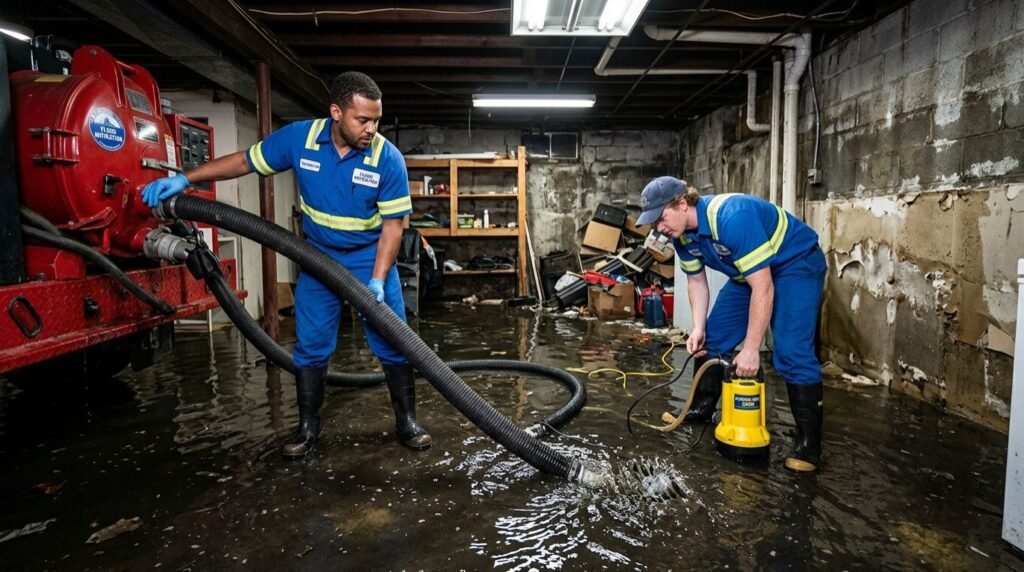
Mold requires moisture to grow. Every hidden mold problem traces back to a moisture source that was either undetected or left unaddressed. Knowing where water tends to enter or accumulate tells you where mold is most likely hiding. Understanding the steps to take during the first 24 hours after water damage is the best way to stop mold before it starts.
Plumbing Leaks Behind Walls and Under Floors
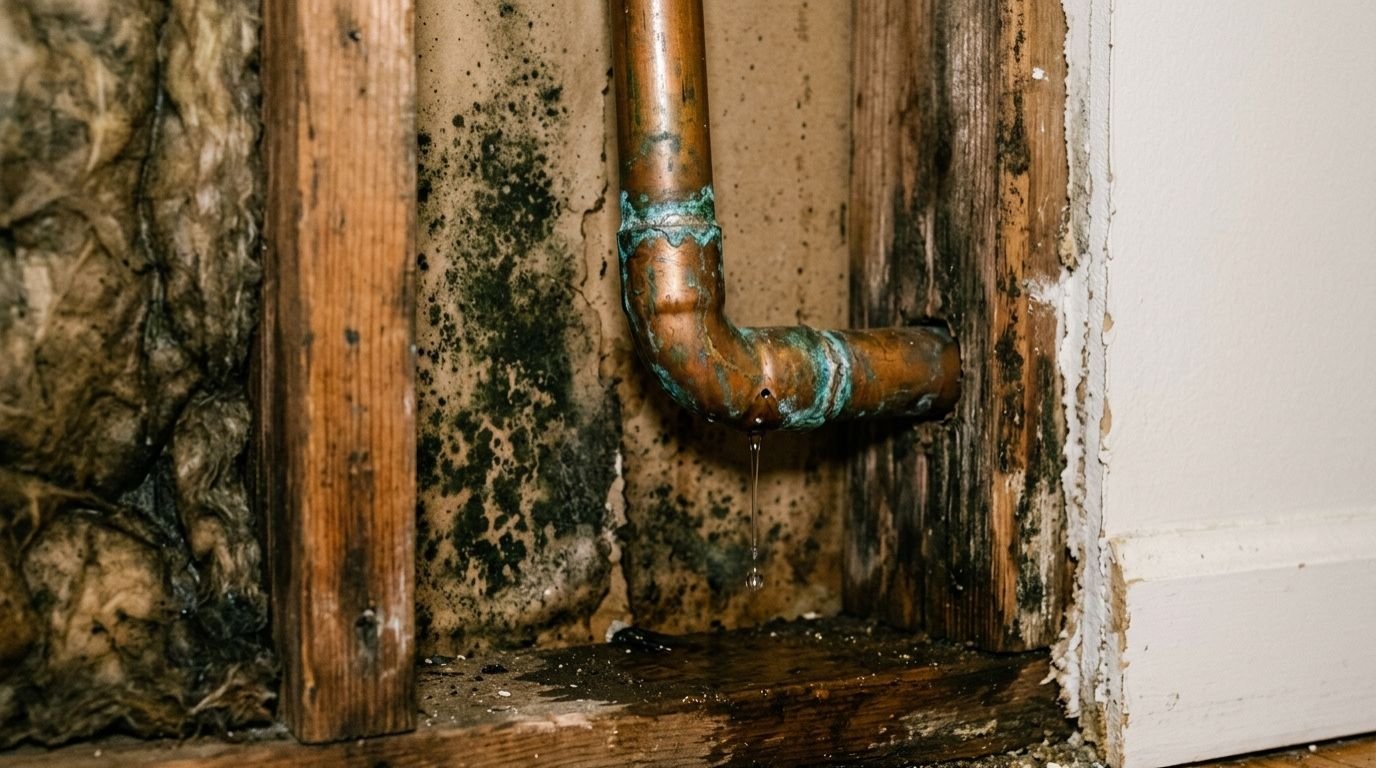
Slow plumbing leaks are one of the most common causes of hidden mold. A pinhole leak or loose joint under a sink can drip water into wall cavities or subflooring for months with no visible surface damage.
Watch for water stains on walls or ceilings below bathrooms, warped flooring near plumbing fixtures, soft spots in drywall, unexplained increases in your water bill, or the sound of running water when nothing is in use.
In older NYC pre-war buildings, galvanized pipes corrode from the inside out. The exterior can look intact while the interior leaks steadily.
Condensation in Poorly Ventilated Spaces
Condensation forms when warm, humid air contacts a cold surface. In New York winters, exterior walls and window frames are common problem areas. Repeated moisture cycling creates mold-friendly conditions, especially in spaces with little airflow.
Look behind furniture pushed against exterior walls, inside closets on exterior walls, around window frames, and in ceiling corners where air barely moves. The fix is not just surface cleaning. It requires better airflow, lower indoor humidity, and sometimes improved wall insulation. Our guide on how to prevent mold growth covers the specific steps to control moisture in these locations.
Foundation and Basement Water Intrusion
Below-grade spaces are vulnerable to water intrusion. In New York, many buildings have finished basement units or below-grade storage rooms. Water enters through foundation cracks and concrete block walls via hydrostatic pressure.
You may not see standing water. Mold in basements often grows on cardboard boxes, wood framing, and drywall installed over concrete walls that were never waterproofed. A moisture meter, available at most hardware stores for under $30, can measure water content in building materials. Readings above 16 percent in wood signal conditions where mold can take hold.
What Health Symptoms Point to Hidden Mold Exposure?
Sometimes your body notices mold before your eyes do. Certain health patterns are connected to ongoing mold exposure, and recognizing them can push you to investigate sooner.
These symptoms have many possible causes. But if members of your household feel better when away from home and worse when they return, mold exposure is worth looking into. The NY State DOH guidance on indoor mold provides official information on health thresholds and tenant rights.
Common symptoms linked to mold exposure include persistent coughing or wheezing, nasal congestion that does not respond to allergy treatments, itchy or irritated eyes, unexplained headaches, skin irritation, and fatigue that seems out of proportion to your daily activity. People with existing asthma often notice a worsening of their condition.
Children, elderly residents, and anyone with a weakened immune system tend to react more strongly. In New York’s multifamily buildings, a mold source in one area of a building can affect residents on multiple floors without anyone connecting the cause. Not all restoration companies are created equal before you hire one, find out exactly how to choose a water damage restoration company you can trust.
Where Does Hidden Mold Most Often Grow in NYC Homes?
Knowing where to look is as important as knowing what to look for.
Behind Bathroom Tile and Shower Walls
Grout and caulk absorb moisture over time. When they crack or separate, water gets behind the tile and into the wall substrate. Mold can spread extensively in that space while the tile surface looks completely fine.
Watch for grout that stains repeatedly after cleaning, soft spots in the wall near the shower, a musty smell that is strongest right after showering, or tiles that feel slightly loose when pressed.
Inside HVAC Systems and Ductwork
HVAC systems move air through every room, which means mold inside ductwork spreads spores throughout the home. Mold grows in duct systems when condensation forms on interior surfaces or when the air conditioning coil accumulates moisture and debris.
Check the supply registers in each room. Dark discoloration around the register, or a musty smell that increases when the system runs, are signs the duct system may be involved. Professional air duct cleaning is required before the system is used after any confirmed mold contamination.
Attic Spaces
Poor attic ventilation traps humid air from the living space below. When that warm air contacts the cooler underside of the roof decking in winter, condensation forms repeatedly. Undetected roof leaks deliver moisture directly into the attic.
Attic mold can cover large sections of roof sheathing and rafters before anyone notices because attics are rarely visited.
Crawl Spaces and Under-Floor Cavities
Crawl spaces accumulate ground moisture and have very limited airflow. When a vapor barrier degrades or was never installed, moisture evaporates upward into the floor joists and subfloor. Signs include soft spots in flooring above, a persistent musty smell in rooms overhead, or increased pest activity around wood members.
Inside Walls After Water Damage
Any time water enters a wall cavity from a leak or pipe burst, mold can begin growing within 24 to 72 hours if materials stay wet. Walls that dried on their own after a water event, without professional dehumidification equipment, are at real risk for concealed mold even when surfaces feel dry to the touch. For a step-by-step guide on what to do immediately after a water event, see our post on water damage response to prevent this exact scenario.
How to Check for Hidden Mold Without Tearing Open Walls
You can gather strong evidence of hidden mold without any demolition.
Air Quality Testing
Air quality testing captures a sample of the air in your home and analyzes it for mold spore counts and species. An outdoor baseline sample is taken first for comparison. Elevated indoor spore counts, or the presence of species like Stachybotrys that are rarely found outdoors, indicate an active indoor source.
ERMI testing analyzes settled dust from your home and provides a detailed species breakdown. It is more sensitive than standard air sampling and can detect colonies that are not actively releasing spores at the time of testing. The EPA indoor air quality mold resource explains the methodology and how to interpret results.
Moisture Mapping and Borescope Inspection
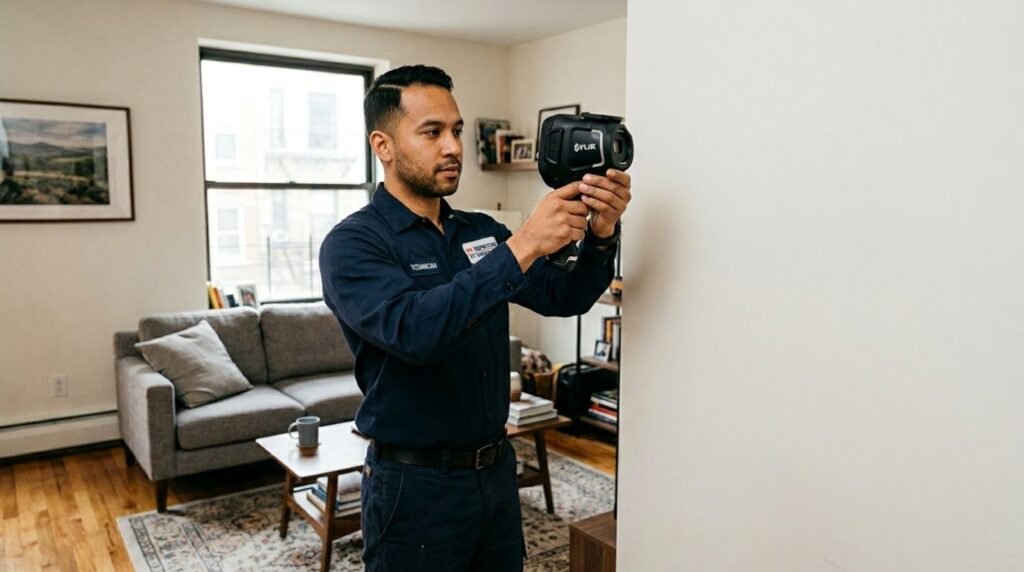
A professional can use thermal imaging cameras and moisture meters to find wet areas inside walls and floors without opening them. Thermal imaging spots temperature differences caused by evaporative cooling around wet materials. Moisture meters measure water content directly at the surface.
If a wet zone is identified, a borescope can confirm mold growth visually inside a wall cavity without opening entire sections of drywall.
What Does Professional Mold Remediation Actually Involve?
If testing confirms hidden mold or a professional inspection finds active growth, remediation is the process of removing it safely and stopping it from returning.
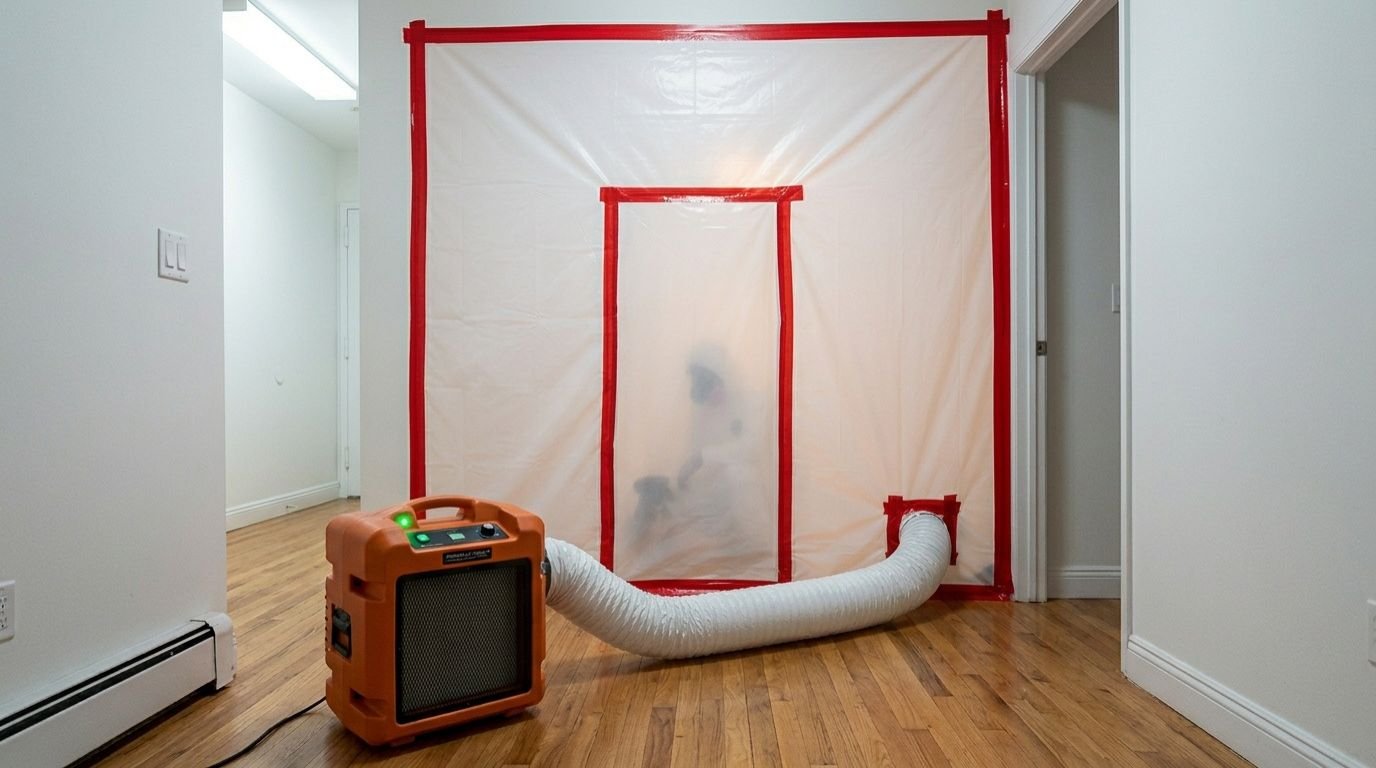
Professional remediation is not simply wiping down a surface. For mold remediation to work on concealed growth, it must address the moisture source, contain the work area so spores do not spread, remove affected materials, and verify results through post-remediation air testing. Our guide on mold removal vs. mold remediation explains exactly what each phase covers and how they differ.
The process typically involves sealing off the work area with plastic sheeting and negative air pressure, removing contaminated drywall, insulation, or flooring, HEPA vacuuming and treating structural surfaces that stay in place, drying the area fully, and rebuilding with mold-resistant materials.
In New York multifamily buildings, remediation may also require coordinating with building management and neighboring units when the moisture source crosses unit lines. If you are a tenant, New York law requires landlords to address mold that poses a health risk. Air quality testing documentation supports your position if a dispute arises. See our mold remediation EPA standards guide for the professional protocols that govern this process.
Why Do NYC Property Owners Trust Golden Touch for Mold Detection?
Golden Touch Restoration Specialist has completed more than 2,500 restoration projects across all five NYC boroughs and Nassau County. Every technician is licensed, insured, and certified in mold, water, fire, and sewage restoration. The team is on-site within 30 minutes, available 24/7/365.
- Certified mold inspection and testing. Moisture mapping, thermal imaging, and air quality sampling locate mold without unnecessary demolition.
- Full-service remediation. From containment through reconstruction, one team handles the entire process.
- 24/7 emergency response. Delays beyond 48 hours after water exposure significantly increase remediation scope.
- New York expertise. Pre-war construction, shared building systems, and multifamily coordination require local knowledge. The team works across all of it.
- Transparent documentation. Before and after testing reports, moisture readings, and photos give you a clear record.
Frequently Asked Questions About Hidden Mold
Can mold grow inside walls with no visible water damage?
Yes. Mold can grow from condensation alone, particularly on exterior walls with poor insulation. You do not need a visible leak for moisture to accumulate inside building materials. See our guide on how to prevent mold growth to understand which conditions to control.
How long does it take for mold to grow after water exposure?
Mold can begin colonizing wet materials within 24 to 72 hours. Warmer temperatures and poor ventilation speed that up. This is why professional drying after any water event matters even when surfaces feel dry. Understanding how quickly mold grows after water exposure helps clarify why fast response is the single most important factor.
Is black mold more dangerous than other types?
The term usually refers to Stachybotrys chartarum, which produces mycotoxins and requires sustained moisture to grow. That said, any significant mold growth in a living space should be addressed, regardless of color or species.
Can bleach kill hidden mold?
Bleach works on non-porous surfaces but does not penetrate porous materials like drywall or wood. It kills surface growth while leaving the mold structure inside the material intact, allowing regrowth. Physical removal is required for hidden mold. Our guide on the dangers of DIY mold removal explains why surface-only treatment always fails on porous materials.
How do I know if mold remediation was successful?
Post-remediation air testing by an independent third party is the only reliable confirmation. Indoor spore counts should return to or below outdoor baseline levels. Reputable companies support independent post-testing rather than self-certifying their own work.
Hidden mold problems rarely announce themselves all at once. They build over weeks through a slow leak, a condensation pattern, or moisture that never fully dried after a water event. By the time they become visible, the scope is already significant. Acting on early signs, a persistent smell, unexplained symptoms, or a history of water damage, keeps the remediation small and manageable.
Golden Touch Restoration Specialist serves homeowners and property managers across all five NYC boroughs and Nassau County. Call (347) 551-8094 or email restorationspecialistnyc@gmail.com to schedule a mold inspection. The team is available 24/7 and on-site within 30 minutes.
Suspect Hidden Mold in Your NYC Home? We Find It Without Unnecessary Demolition.
Water damage does not wait, and neither should you. Every hour without professional response increases repair costs and health risk. One call reaches a certified team that can be at your door within 30 minutes.
Do not wait to find out how bad it is. Reach out now for your free consultation.
Call Now: (347) 551-8094 | Available 24/7/365
Free consultation. No obligation. Serving Queens, Brooklyn, Manhattan, The Bronx, Staten Island, Elmont, Floral Park, Franklin Square, Valley Stream, and all surrounding Nassau County communities.
Trust Signals: 99% Satisfaction Rate | 2,500+ Projects | All 5 NYC Boroughs