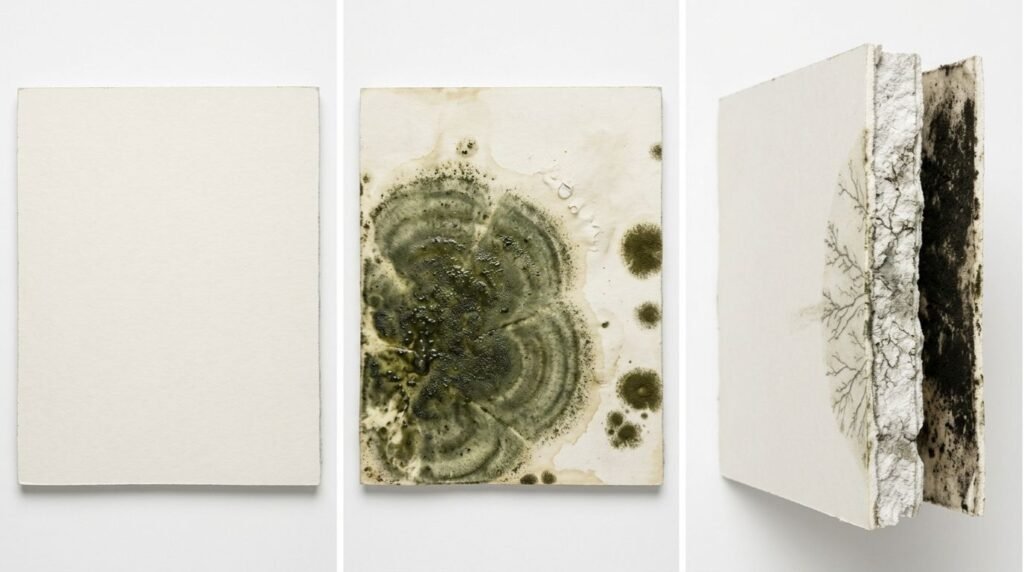
Mold does not behave the same way on every surface. On a tile wall or a metal pipe, it sits on top. On drywall, wood framing, carpet, or insulation, it moves inside. That difference changes everything about how remediation works, what gets saved, and what gets removed entirely.
New York properties face elevated mold risk year-round. Aging brownstones in Brooklyn, pre-war buildings in Manhattan, and flooded basements in Queens all share one common challenge: moisture gets in, and materials absorb it before anyone notices. By the time visible mold appears, the growth is often already several layers deep.
The question property owners ask most is simple: can this be saved, or does it have to go? The answer depends on the material type, the extent of contamination, how long the mold has been present, and what species are involved. There is no single answer that covers every case, but there are clear professional standards that guide those decisions.
This guide covers what you need to know before, during, and after a mold remediation assessment:
- How porous, semi-porous, and non-porous materials respond differently to mold
- Which common building materials are candidates for cleaning versus removal
- The specific conditions that push a material past the point of saving
- What the remediation process looks like for salvageable materials
- How New York’s older housing stock complicates these decisions
- When professional remediation is required over DIY approaches
Why Does the Porous vs. Non-Porous Distinction Matter for Mold Remediation?
Mold remediation for porous materials requires a fundamentally different approach than surface cleaning because mold does not simply rest on top of these materials. It grows into them.
Porous materials have open cell structures with microscopic cavities, gaps, and fibers that absorb moisture. Once moisture is absorbed, mold spores have a food source, a protected environment, and a path inward. The result is contamination that cannot be reached with surface treatments alone. You can scrub the outside of a moldy drywall panel and remove what you see, but the hyphae, which are the root-like structures mold uses to feed and spread, are still active inside the material.
Non-porous materials like ceramic tile, glass, stainless steel, and sealed concrete do not allow penetration. Mold sits on the surface and can be wiped away with proper cleaning agents. These materials can almost always be saved if cleaned promptly.
Semi-porous materials fall between the two categories. Hardwood floors, some types of brick, and structural lumber are examples. They absorb moisture but not as readily as carpet or drywall, and they have some potential for remediation depending on the depth and duration of contamination.
The IICRC S520 Standard for Professional Mold Remediation, which is the industry benchmark that certified remediation teams follow, uses a three-category system based on material porosity and contamination level. This standard directly informs the decision to clean or remove any given material. The EPA mold cleanup guidance states that absorbent or porous materials such as ceiling tiles and carpet may need to be discarded if mold contamination is present, because mold can grow into the empty spaces and crevices in ways that make complete removal impractical.
Which Porous Building Materials Are Candidates for Cleaning vs. Removal?
New York’s housing stock is old. The city has a high concentration of pre-war construction, post-war brick buildings, and mid-century developments, all of which rely on materials that are particularly susceptible to mold once moisture enters.
Drywall (Gypsum Board)
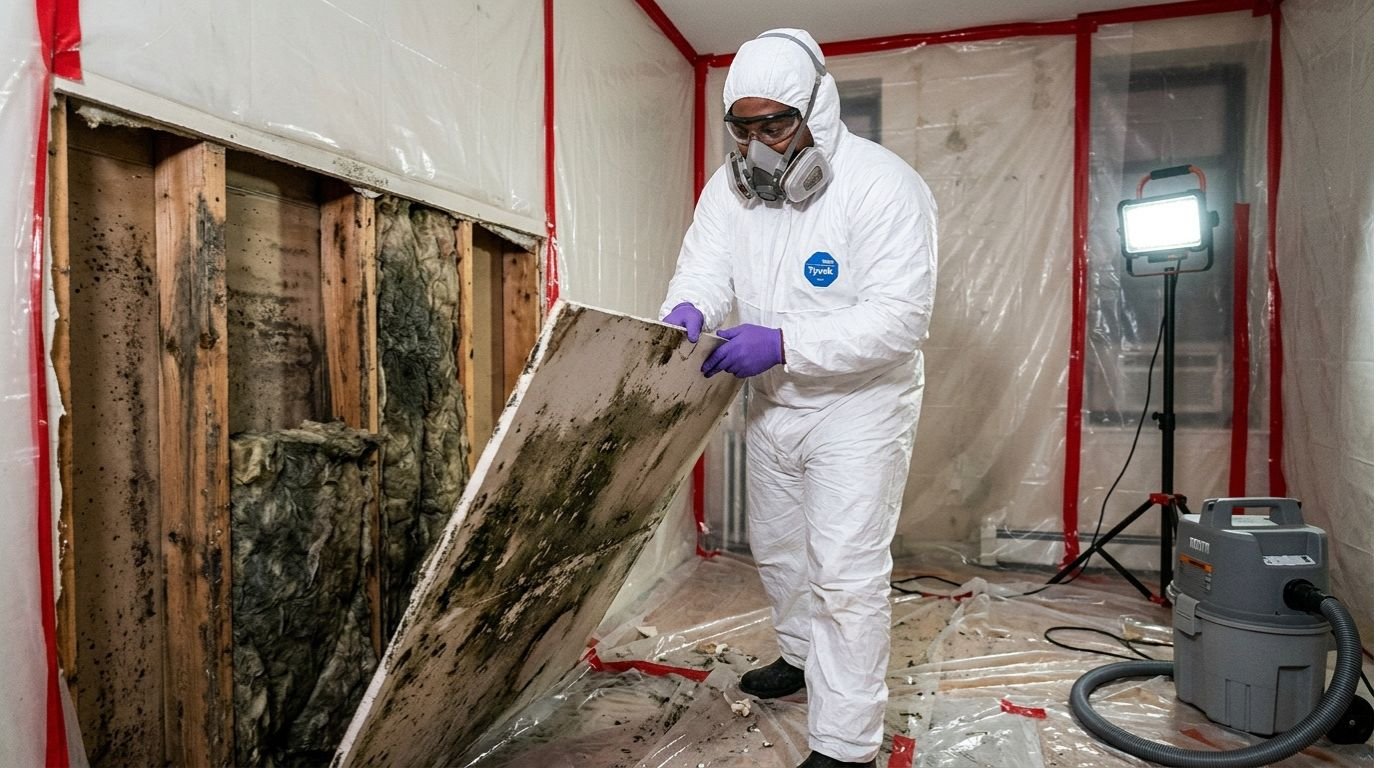
Drywall is one of the most common building materials and one of the least forgiving when it comes to mold. The paper facing on both sides of a drywall panel is a direct food source for mold. The gypsum core absorbs moisture readily. Once mold colonizes drywall, cleaning the surface does not address what has grown into the paper and core.
In most professional remediation scenarios, moldy drywall is removed. Any drywall that shows visible mold growth, discoloration, or softening from moisture is typically cut out and replaced. For guidance on recognizing when this has occurred, see our post on signs of mold in walls.
Insulation (Fiberglass Batt and Cellulose)
Insulation is almost never salvageable after mold contamination. Fiberglass batt insulation has an enormous surface area within its fiber matrix, making it an ideal environment for mold to colonize extensively. Cellulose insulation, which is made from recycled paper, is essentially a mold food source.
Neither type can be effectively cleaned. Both must be bagged, removed, and disposed of under containment protocols. Any insulation that has been wet for more than 24 to 48 hours should be treated as contaminated even if visible mold has not yet appeared, because mold growth may already be underway at the microscopic level. Understanding how quickly mold can develop inside wet insulation explains why this rule has no exceptions.
Carpet and Carpet Padding
Carpet can sometimes be saved if it was exposed to clean water for a very short time and dried within 24 to 48 hours. Once mold growth begins, the carpet is no longer salvageable. Padding is almost never saved because it retains moisture and cannot be dried effectively in place. In New York, where basement flooding and pipe leaks are common, most carpet affected by water damage ends up being replaced rather than restored.
Wood Framing and Structural Lumber
Structural wood presents the most nuanced situation in mold remediation decisions. Wood is semi-porous, which means it does absorb moisture and can develop deep mold growth, but it also has some capacity for remediation through a process called HEPA sanding followed by the application of an encapsulant.
However, wood that has experienced extensive decay, that shows structural softening, or that has been contaminated by mycotoxin-producing species is typically removed regardless of the difficulty involved. In older pre-war NYC properties, some structural members cannot easily be replaced, making the sanding and encapsulation approach particularly relevant when contamination is confirmed to be surface-level only.
Ceiling Tiles
Drop ceiling tiles made from mineral fiber or cellulose are not salvageable once moldy. They are inexpensive, lightweight, and designed to be replaceable. Any tile showing staining, discoloration, or growth should be bagged in place and removed under containment. Attempting to clean these tiles spreads spores and is not cost-effective.
Subflooring and Wood Subfloor Panels
Plywood and OSB (oriented strand board) subfloor panels sit directly on joists and are often the first structural material to absorb water from a leak or flood above or below. Both are engineered wood products with adhesive-bonded layers, and once moisture penetrates those layers, delamination begins. Mold can colonize the wood fibers throughout the panel thickness.
Whether subflooring can be saved depends on how wet it got and for how long. Any subfloor that has swollen, delaminated, or shows mold across more than a small area is replaced. In New York apartments, subfloor damage frequently comes from upstairs unit leaks. Both the unit where the leak originated and the unit below need assessment. Coordinating this type of multi-floor scope requires the professional water damage restoration experience that spans unit boundaries.
What Conditions Determine Whether a Porous Material Can Be Saved?
The material type is only part of the picture. Three additional factors determine whether any specific porous material is a candidate for cleaning rather than removal.
Time Since Exposure
Mold begins to grow within 24 to 48 hours of water exposure under typical indoor conditions. The longer a porous material has been wet, the deeper the contamination. In New York apartments and brownstones, slow leaks behind walls often go undetected for extended periods. Tenants notice a musty smell, or a stain appears on the ceiling, and by that point the material behind the visible surface has already been colonized. Time is the single most important variable that determines whether remediation or replacement is the right answer.
Mold Species Present
Not all mold is equivalent. Cladosporium, Penicillium, and Aspergillus are common indoor molds that are addressed through standard remediation protocols. Stachybotrys chartarum, the species commonly referred to as black mold, produces mycotoxins and is associated with more significant health concerns. It also typically indicates sustained, long-term moisture, which correlates with deeper material contamination.
When mold testing identifies a mycotoxin-producing species, remediation teams often adopt a more conservative approach to material salvage decisions because the risk of incomplete removal is higher and the health consequences are more serious.
Contamination Depth and Spread
Surface mold on a piece of wood may be addressed with HEPA sanding and encapsulation. Mold that has grown through the full thickness of a drywall panel, or that has spread through a large section of wall cavity, is beyond surface treatment. Certified technicians use moisture meters, thermal imaging cameras, and borescopes to assess how far contamination has spread before making removal decisions.
If the remediation process uncovers more extensive contamination than was visible at the outset, the scope changes. This is not uncommon in New York properties, where wall cavities in older buildings can contain years of moisture accumulation.
What Does the Remediation Process Look Like for Salvageable Materials?
When a material is determined to be a candidate for cleaning rather than removal, the process follows a specific sequence designed to prevent cross-contamination and verify results. For a full overview of what the remediation process covers from start to finish, see our guide on mold removal vs. mold remediation.
Containment
Before any work begins on salvageable materials, the affected area is isolated using polyethylene sheeting and negative air pressure. This prevents spores disturbed during cleaning from spreading to unaffected areas. In occupied buildings, which are common in New York, proper containment is not optional. It is the difference between a controlled remediation and a building-wide contamination event.
HEPA Vacuuming
Loose surface mold is removed first using HEPA-equipped vacuums. Standard vacuums are not appropriate for this purpose because they exhaust spores back into the air. HEPA filtration captures particles down to 0.3 microns, which is sufficient to capture mold spores. This step removes the bulk of surface contamination before any cleaning agent is applied.
Cleaning and Treatment
Salvageable semi-porous materials like structural wood are cleaned with an EPA-registered antimicrobial solution. The application method and dwell time are determined by the material type and contamination level. Following cleaning, structural members may be HEPA-sanded to remove any remaining surface contamination, then treated with an encapsulant that seals the surface and inhibits future growth.
This is skilled work. Bleach, despite being commonly recommended for mold removal, is not appropriate for porous materials. It does not penetrate, it does not kill mold at the root, and its residual moisture can actually promote further growth. Our guide on DIY mold removal dangers explains precisely why consumer products fail on porous surfaces every time.
Clearance Testing
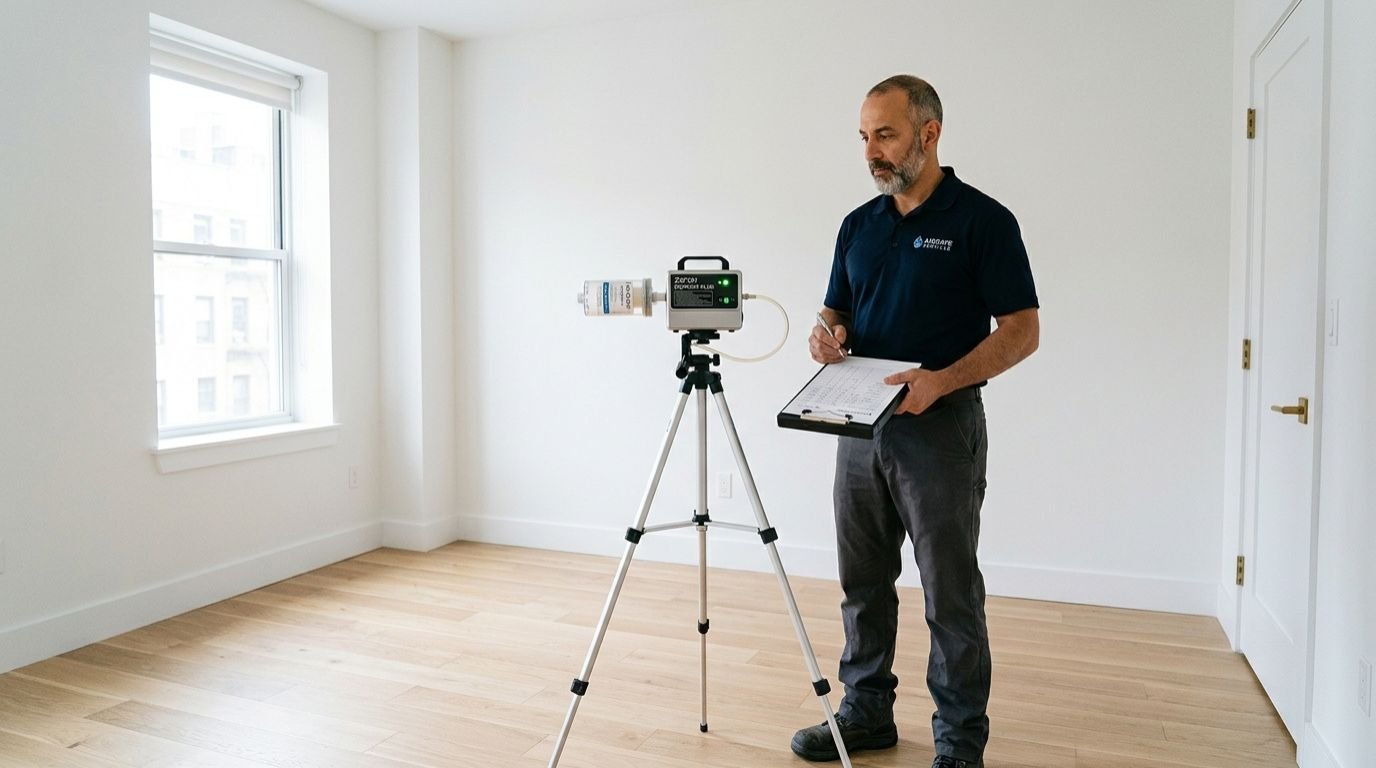
After remediation is complete, a post-remediation verification is conducted. This typically involves air sampling and surface sampling to confirm that spore levels have returned to acceptable thresholds. Our mold remediation EPA standards guide details the specific clearance thresholds used and how independent post-remediation testing is conducted.
What Makes NYC Properties Unique for Porous Material Mold Remediation?
New York properties present conditions that complicate mold remediation decisions in ways that do not apply uniformly to other markets.
Pre-War Construction
Buildings constructed before 1945 often contain original plaster walls, original wood subflooring, and original structural framing. Plaster is semi-porous and responds differently to mold than modern drywall. Pre-war brownstones in Brooklyn and Manhattan commonly have brick backing behind plaster walls, creating a complex moisture pathway. These situations require experience specific to NYC pre-war building construction.
Basement and Below-Grade Spaces
Below-grade spaces in New York face constant hydrostatic pressure from surrounding soil. Concrete block foundations are porous and absorb groundwater. Any porous material used to finish a below-grade space in New York is at elevated risk, particularly in neighborhoods where flood damage is periodic.
HVAC and Duct Systems
Older buildings in New York often have duct systems that run through unconditioned spaces. Condensation forms inside ducts, and if any porous material including the ductwork lining becomes wet and stays wet, mold can develop and be distributed throughout the building. The EPA specifically advises against running an HVAC system if mold contamination is suspected, because doing so disperses spores through the building. Professional air duct cleaning is required before the system is reactivated. Wondering how often your air ducts actually need cleaning? The answer might surprise you here’s how often air ducts should be cleaned in NY.
Post-Flood Remediation
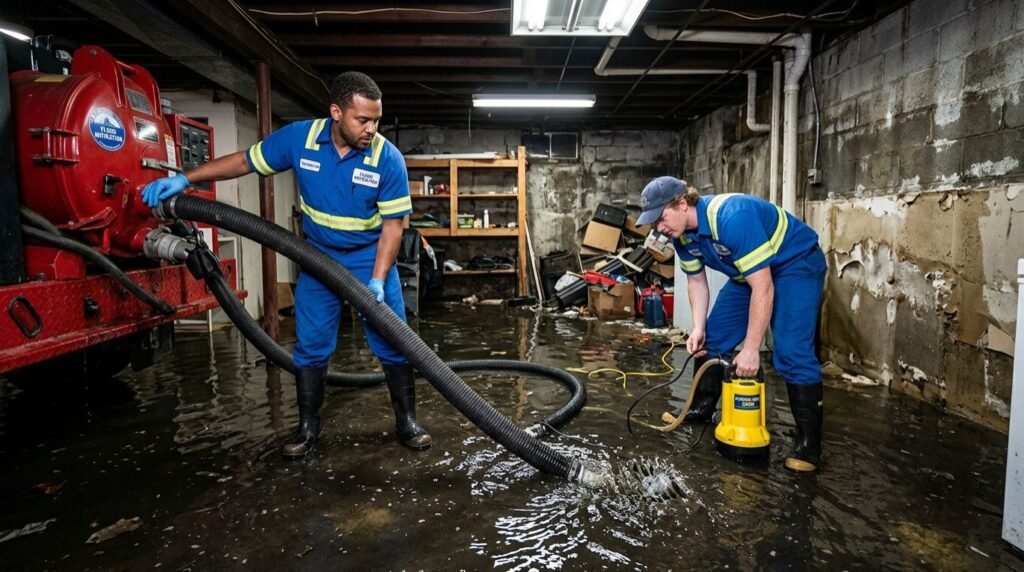
Category 3 water, which includes sewage or floodwater from external sources, changes the calculus on every porous material it contacts. Even materials that might otherwise be candidates for cleaning are typically removed when contaminated by Category 3 water because of pathogen concerns beyond the mold itself.
Which Porous Materials Are Non-Negotiable Removals?
There are situations where no assessment is needed. Some materials, once contaminated with mold under specific conditions, are removed regardless of cost or inconvenience.
- Any porous material that shows structural degradation must be removed. This includes wood framing that has begun to lose structural integrity, subfloor panels that have swollen or delaminated, and joists that show evidence of rot alongside mold growth.
- Any material saturated with Category 3 water, including sewage backflow or external floodwater, is removed and disposed of under appropriate protocols regardless of visible mold presence.
- Any insulation, regardless of type, that has been wet beyond 48 hours is removed.
- Any drywall with visible mold on both faces, meaning contamination has moved through the panel, is removed.
- Ceiling tiles with any visible contamination are removed.
- Carpet and padding that shows any mold growth are removed.
These are not conservative interpretations. They are the professional standards established by the IICRC and consistent with EPA guidance on mold cleanup. A remediation company that promises to clean and save these materials without proper assessment is not following industry standards.
Why Do NYC Property Owners Trust Golden Touch for Mold Remediation?
Golden Touch Restoration Specialist has been handling mold remediation across all five boroughs and Nassau County for over ten years. The decisions about what can be saved and what must be removed are made by certified technicians using moisture meters, thermal imaging, and documented IICRC-compliant assessment protocols.
- IICRC-Certified Technicians. Every member of the remediation team carries current certification in mold remediation. Decisions about material salvage or removal follow published professional standards, not guesswork.
- Proper Containment and Equipment. The team uses negative air pressure containment, commercial-grade HEPA air scrubbers, and professional antimicrobial products appropriate for each material type.
- Post-Remediation Clearance Documentation. Clearance testing and documentation are provided at the close of every job, giving property owners and managers the verification they need for insurance claims and re-occupancy decisions.
- Experience with New York’s Older Building Stock. Pre-war construction, below-grade moisture problems, and post-flood scenarios require experience specific to New York properties. Over 2,500 completed projects in this market means the team has already encountered your situation.
- Insurance Coordination. Working through an insurance claim adds complexity. Golden Touch coordinates directly with insurance carriers, providing documentation of damage assessment and remediation scope to support the claims process.
- Free Initial Assessment. No work begins without a free, no-obligation assessment that gives property owners a clear picture of what is involved, what must be removed, and what can realistically be saved.
Frequently Asked Questions
Can mold in drywall be cleaned without removing the drywall?
In most cases, no. Mold grows into the paper facing and gypsum core of drywall in ways that surface cleaning cannot address. Both IICRC standards and EPA guidance indicate that moldy drywall is typically replaced rather than cleaned. See our mold removal vs. mold remediation guide for the specific conditions under which a cleaning assessment might apply. Ever wondered how pros pull thousands of gallons of water out of a flooded home? Here’s how water extraction actually works.
How do I know if my wood framing can be saved or needs to come out?
A certified remediation technician uses moisture meters and visual assessment to determine the depth of contamination in wood framing. Surface contamination on structural lumber can sometimes be addressed through HEPA sanding and encapsulant application. Wood that shows structural softening, deep penetration of mold growth, or evidence of decay alongside mold is removed. This assessment requires professional evaluation.
Is mold testing required before remediation begins?
Mold testing is not always required before remediation, but it is recommended when the extent of contamination is unclear, when occupants have reported health symptoms, when the property is a rental unit subject to regulatory requirements, or when the contamination may involve mycotoxin-producing species. Post-remediation clearance testing is standard practice. Our EPA standards guide for mold remediation covers the testing protocols used at each stage.
Can carpet be saved after mold exposure?
Carpet that was exposed to clean water and dried completely within 24 to 48 hours may be salvageable. Once mold growth begins in carpet or carpet padding, the material is not practically cleanable and should be removed. Carpet padding is almost never saved after water exposure. To understand exactly why this window is so short, see our post on how quickly mold can grow in saturated materials.
Does insurance cover mold remediation in New York?
Coverage depends on the source of the mold and the specific policy terms. Mold that results from a sudden and accidental covered event, such as a burst pipe, is typically covered. Mold resulting from long-term neglect or gradual moisture intrusion is often excluded. Golden Touch Restoration Specialist works directly with insurance adjusters and provides the documentation needed to support valid claims.
The decision to save or remove a porous material is not a matter of preference. It follows documented professional standards based on material type, contamination depth, species identified, and time elapsed. Every case where a porous material is cleaned rather than removed without proper assessment creates risk of recurrence. The right call protects the occupants and the property long after the remediation team has left. Water mitigation, remediation, restoration same thing or not? Here’s the real difference between water mitigation, remediation, and restoration.
Call Golden Touch Restoration Specialist at (347) 551-8094 or email restorationspecialistnyc@gmail.com for a free assessment. Serving all five NYC boroughs and Nassau County, 30-minute response, 24/7.
Need a Mold Assessment for Your NYC Property? We Evaluate and Document Everything.
Water damage does not wait, and neither should you. Every hour without professional response increases repair costs and health risk. One call reaches a certified team that can be at your door within 30 minutes.
Do not wait to find out how bad it is. Reach out now for your free consultation.
Call Now: (347) 551-8094 | Available 24/7/365
Free consultation. No obligation. Serving Queens, Brooklyn, Manhattan, The Bronx, Staten Island, Elmont, Floral Park, Franklin Square, Valley Stream, and all surrounding Nassau County communities.