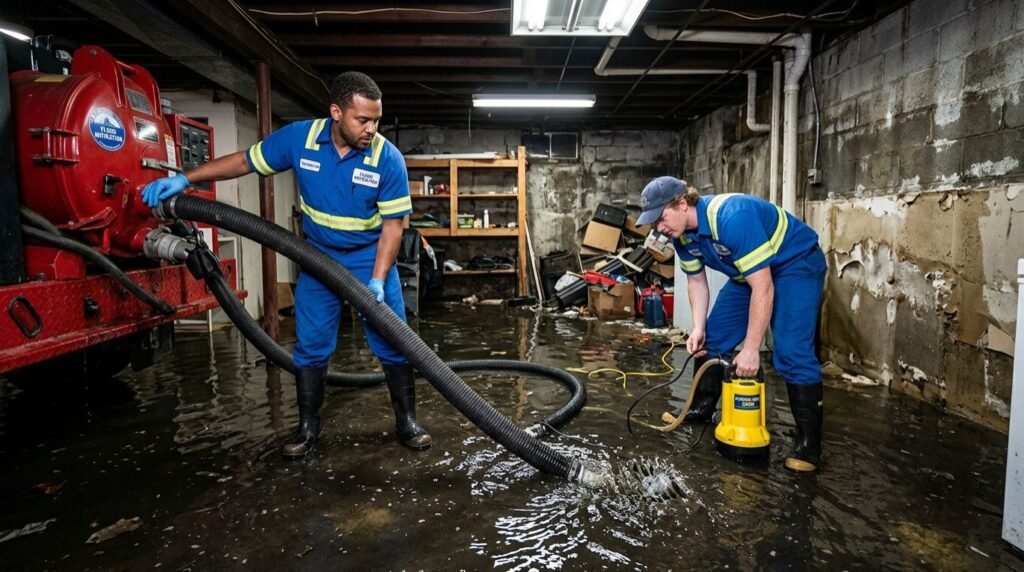

You walk into your living room or look up in the bathroom and something is different. A brown ring you have not noticed before. Paint that seems to be bubbling slightly. A small soft area in the ceiling that was not there last week. Your ceiling is registering a complaint – something above it is wet.
What you see on the ceiling surface is almost never the full extent of the problem. It is the visible signal of water damage that has already saturated material above migrated through a floor assembly, pooled in an attic, or run along a structural element before finding its way through. By the time the ceiling shows symptoms, the hidden damage is typically more extensive than what the surface reveals.
This post explains what each ceiling water damage sign actually indicates, where the water is most likely coming from in NYC and Nassau County properties, and the specific conditions that cross the line from “monitor this” to “call a professional today.”
What Each Ceiling Damage Sign Is Telling You
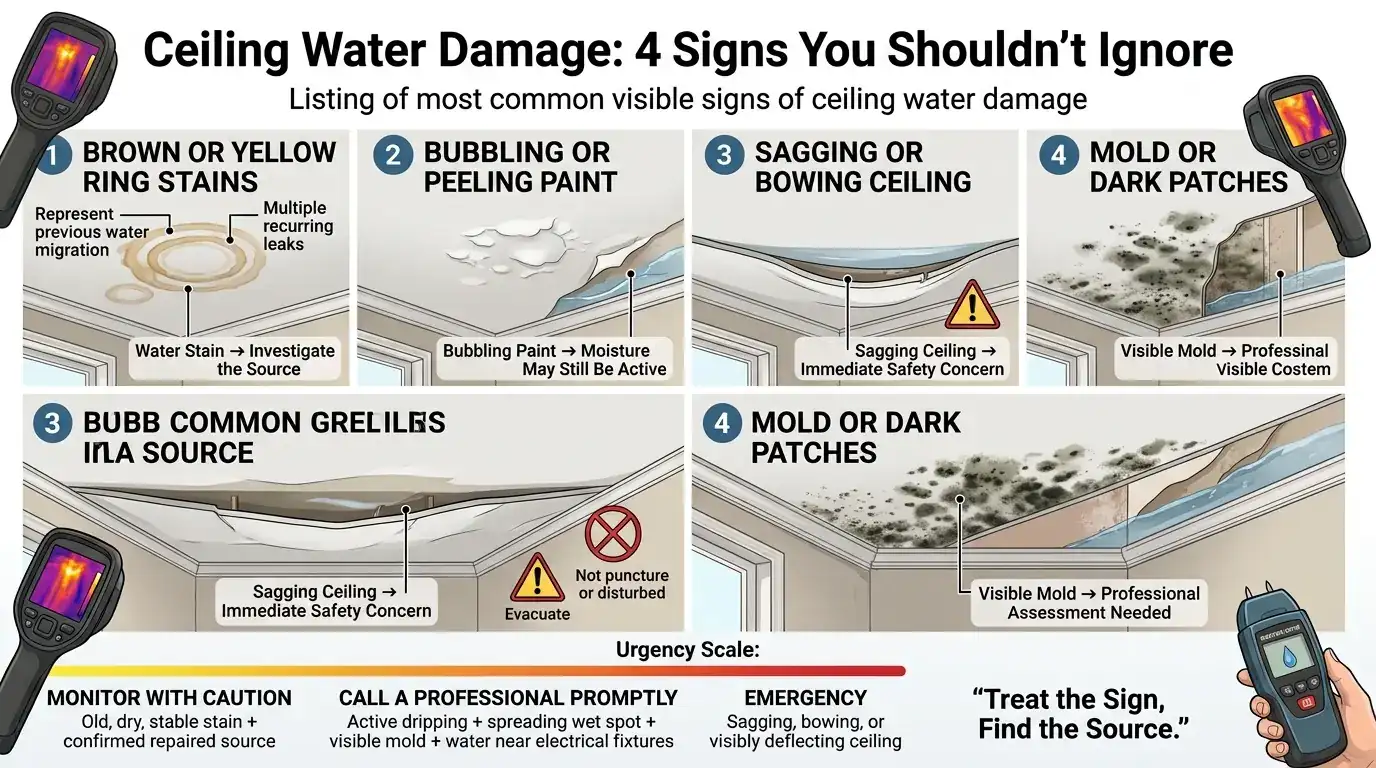
- Brown or yellow ring stains. The classic ceiling water stain – a brown or tan ring with a slightly darker outer edge – indicates that water saturated through the ceiling material and evaporated, leaving behind mineral deposits from the water. The ring marks the high-water boundary of each water event. A single ring suggests one event. Concentric rings – a smaller old ring nested inside a larger new one – indicate recurring events. A single stain from a one-time event that has been fully resolved is a different problem than recurring stains from an ongoing source.
- Bubbling or peeling paint. When moisture is trapped behind the paint film, the paint loses adhesion to the substrate below and begins to blister. This indicates active or very recent moisture behind the paint surface – the water content has not yet fully evaporated. Bubbling paint should be treated as an indicator of current moisture rather than past moisture, and the source should be identified before any cosmetic repair.
- Sagging or bowing sections. A ceiling that is bowing downward under its own weight has absorbed significant water and is holding it. Drywall absorbs several pounds of water per square foot before showing visible deflection. A sagging ceiling is a structural emergency – the accumulated water weight can cause sudden collapse without further warning. Evacuate the area immediately. Do not attempt to puncture or drain a sagging ceiling section yourself.
- Mold spots or dark patches. Visible mold on a ceiling surface indicates sustained moisture over a period of at least 24 to 48 hours – long enough for mold spores to germinate and establish visible colonies. The visible growth on the ceiling surface is typically only the front face of mold that has established through the full depth of the affected material. Mold requires certified mold remediation – not just cleaning – to address properly.
Where NYC Ceiling Water Damage Most Commonly Comes From
In NYC and Long Island properties, the source of ceiling water damage depends heavily on what is directly above the affected ceiling.
- Upstairs plumbing failure. In multi-floor properties – the most common NYC situation – ceiling water damage directly below a bathroom, kitchen, or laundry area indicates a plumbing failure above. Toilet flange seal failures, supply line leaks under sinks, and washing machine hose failures are the most frequent sources. In older buildings, galvanized and cast-iron supply and drain pipes corrode from the inside and fail at joints.
- Roof and flashing failures. Ceiling stains in top-floor apartments, brownstone top floors, and Nassau County home rooms directly below the roof indicate roof intrusion. Water entry points are typically at flashing around chimneys, vents, and skylights, or at deteriorated shingles. Stains that appear or worsen during or after rainfall confirm a roof source.
- HVAC condensate overflow. Central air conditioning systems produce condensate water as part of normal operation. When condensate drain lines clog, overflow, or fail, they discharge into the ceiling assembly above the air handler unit. In NYC apartment buildings with fan-coil units mounted above ceilings, condensate overflow is one of the most common sources of ceiling water damage in summer months.
- Inter-unit plumbing in shared-wall construction. In row houses and apartment buildings with shared plumbing stacks, a failing drain line within the shared wall assembly can drain toward any connected unit. The ceiling water damage appears in a unit with no connection to the failure source.
When You Can Monitor vs. When to Call Immediately
Not every ceiling stain is an emergency. But several specific conditions cross the line into situations where a professional should be called the same day.
- Call immediately if: The ceiling is sagging, bowing, or showing any visible deflection – this is a collapse risk. There is active dripping or a wet spot that is actively spreading. Any mold is visible. The stain appeared around an electrical fixture, including recessed lights or ceiling fans – water near electrical wiring is a fire and shock hazard. The source of the water has not been identified and stopped. The stained area is large – more than a few square feet of a floor assembly may be saturated.
- Monitor with caution if: The stain is old, dry, and stable – confirmed to have come from a one-time event that is fully resolved. The source has been positively identified and repaired. The affected area is genuinely small and isolated.
Even in the “monitor” category, painting over a stain without professional moisture assessment is not the right answer. Stains that look dry may have active moisture in the ceiling assembly above. Our water damage restoration service includes thermal imaging assessment that can confirm whether hidden moisture is present above a ceiling without opening it – the right first step before any cosmetic repair. Is black mold really more dangerous than other types? Find out with this breakdown of black mold vs regular mold.
What Professional Ceiling Water Damage Assessment Involves
A professional assessment begins with identifying the source, not the symptom. A stain is treated only after the cause is confirmed and stopped.
Using thermal imaging cameras, technicians map the temperature differential across the ceiling assembly to identify wet zones and the direction of water migration. Pin-type moisture meters confirm saturation levels in the ceiling material and the floor assembly above. In multi-floor buildings, this assessment often extends to the unit above – where the real source is – before any work in the unit below begins. Water mitigation, remediation, restoration same thing or not? Here’s the real difference between water mitigation, remediation, and restoration.
Once the source is confirmed stopped and the full extent of moisture is mapped, the restoration plan addresses drying and, where necessary, material removal. Ceiling drywall that has been saturated may require removal to expose and dry the structural framing and subfloor above. For a detailed explanation of what moisture mapping involves and why it is essential to this process, see our post on what moisture mapping is and why every water damage job needs it. And for the correct immediate response steps from the moment you discover the damage, our guide on what to do in the first 24 hours after water damage walks through the full sequence.
Frequently Asked Questions
Can I just paint over a water stain on my ceiling?
Only after two conditions are met: the source of the water has been positively identified and permanently repaired, and the ceiling material has been confirmed dry by professional moisture assessment. Painting over an active or residually wet stain seals moisture into the material, accelerating mold growth behind the paint surface and causing the stain to bleed through the new paint within weeks. If the source is confirmed stopped and the material is confirmed dry, a stain-blocking primer followed by finish paint is the correct cosmetic repair sequence.
How long does ceiling water damage take to dry on its own?
Ceiling drywall saturated from an above-unit water event rarely dries adequately on its own in NYC ambient conditions. In a sealed apartment with typical summer humidity, a saturated ceiling assembly may remain above the mold-threshold moisture level for weeks without active drying equipment. Professional structural drying achieves target moisture content in three to five days for a typical ceiling water damage situation, compared to four to six weeks or longer for ambient drying – during which mold almost certainly establishes.
Who is responsible for ceiling water damage in an NYC apartment?
Responsibility follows the source. Water originating from a plumbing failure within your unit is your responsibility. Water originating from a plumbing failure in the building infrastructure falls under the building’s liability. When the failure is in the unit directly above yours, that unit owner’s policy and potentially the building’s policy both apply. Document your discovery with photos and time-stamped notification to building management the moment you notice the damage.
Is ceiling water damage covered by insurance?
Sudden and accidental ceiling water damage from a covered peril – burst pipe in the unit above, roof leak from a storm event – is covered by standard homeowners or renters insurance. Gradual damage from a long-term slow leak that the insurer determines should have been detected and reported earlier may be excluded. The IICRC S500 standards for what constitutes adequate documentation of sudden versus gradual damage are what adjusters use to make this determination – which is why professional moisture mapping documentation from day one is valuable even for seemingly minor ceiling events.
Golden Touch Restoration Specialist responds to ceiling water damage emergencies across NYC and Nassau County. For properties on the North Shore of Long Island, our team covers water damage restoration in Great Neck and surrounding communities. Call (347) 551-8094 for 24/7 emergency response.