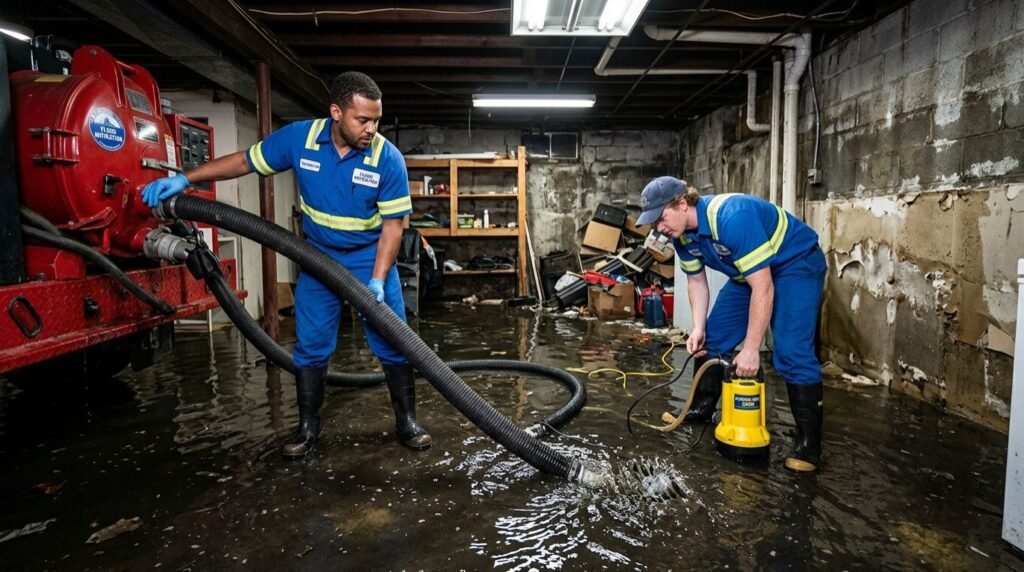
When a restoration team arrives at your water-damaged, they do not start by pulling up carpet or cutting drywall. They start by mapping. Every minute of the next few hours, they are pressing instruments against your walls, floors, and ceilings surfaces that look completely fine and documenting numbers that tell them where your property is actually wet.
This process is moisture mapping, and it is the difference between a restoration that solves the problem and one that leaves hidden moisture in your walls to grow mold for weeks while your property looks repaired.
What Is Moisture Mapping?
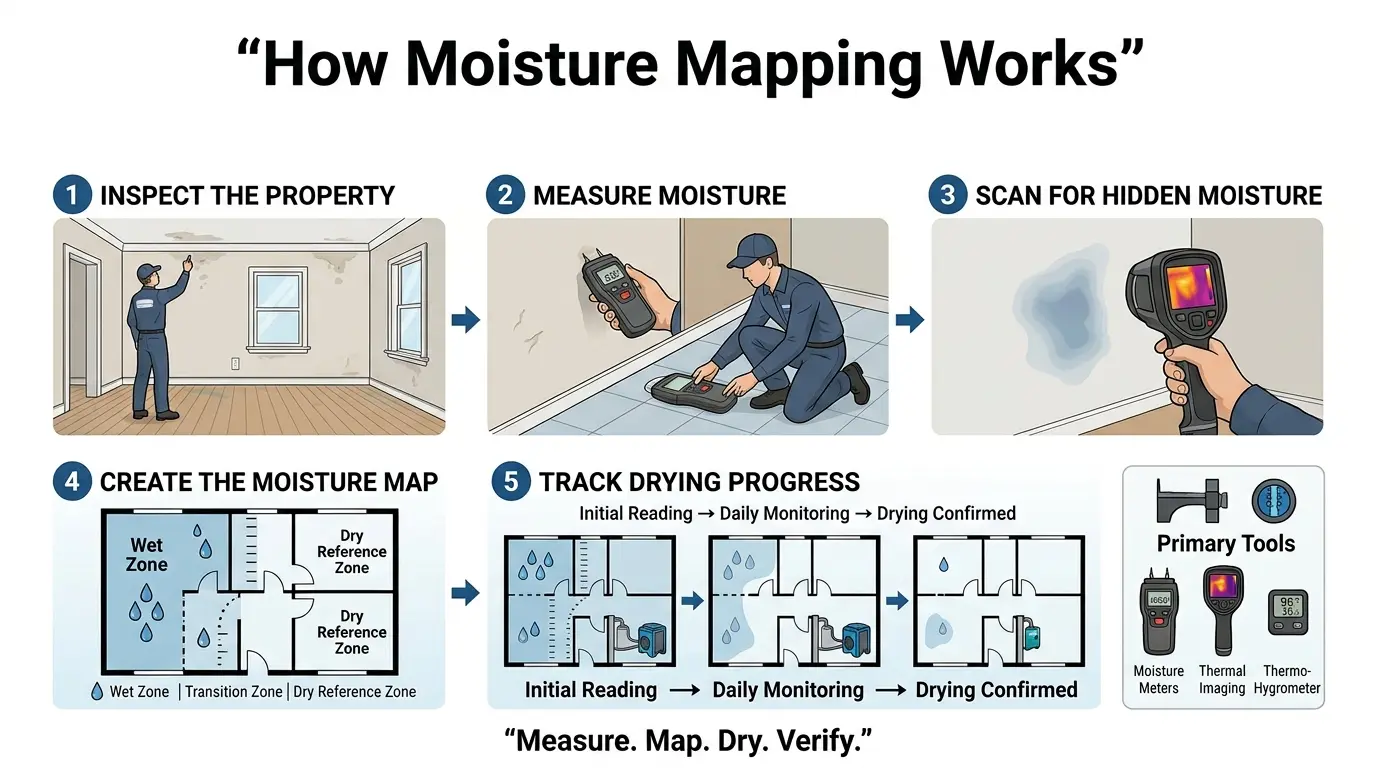
Moisture mapping is the systematic process of detecting, measuring, and documenting water distribution throughout a structure including water that has migrated into building materials you cannot see with the naked eye. The result is a spatial record, typically drawn onto a floor plan of the property, showing wet zones, transition zones, and dry reference areas side by side.
It is not a visual inspection. Water does not stay where it lands. A burst pipe on the second floor of a Flatbush brownstone does not just soak the floor directly below the break – it migrates laterally through the subfloor assembly, wicks upward through wall framing, travels along plumbing chases, and can appear in a room 15 feet from the source. Moisture mapping tracks that migration. Without it, the restoration team is making decisions about what to dry and what to remove based on incomplete information which means they will miss pockets of moisture that cause mold, structural rot, and callbacks weeks later.
What Equipment Does Professional Moisture Mapping Use?
Moisture mapping uses three primary instruments, each addressing a different aspect of water detection.
- Pin-type and pinless moisture meters measure the moisture content of building materials by electrical resistance. Both types are used to establish readings across a grid of measurement points on floors, walls, and ceilings. Readings are compared against control measurements from dry reference areas in the same building. IICRC S500 restoration standards define target moisture content levels – below 16% for wood framing – that must be achieved before a job is considered complete.
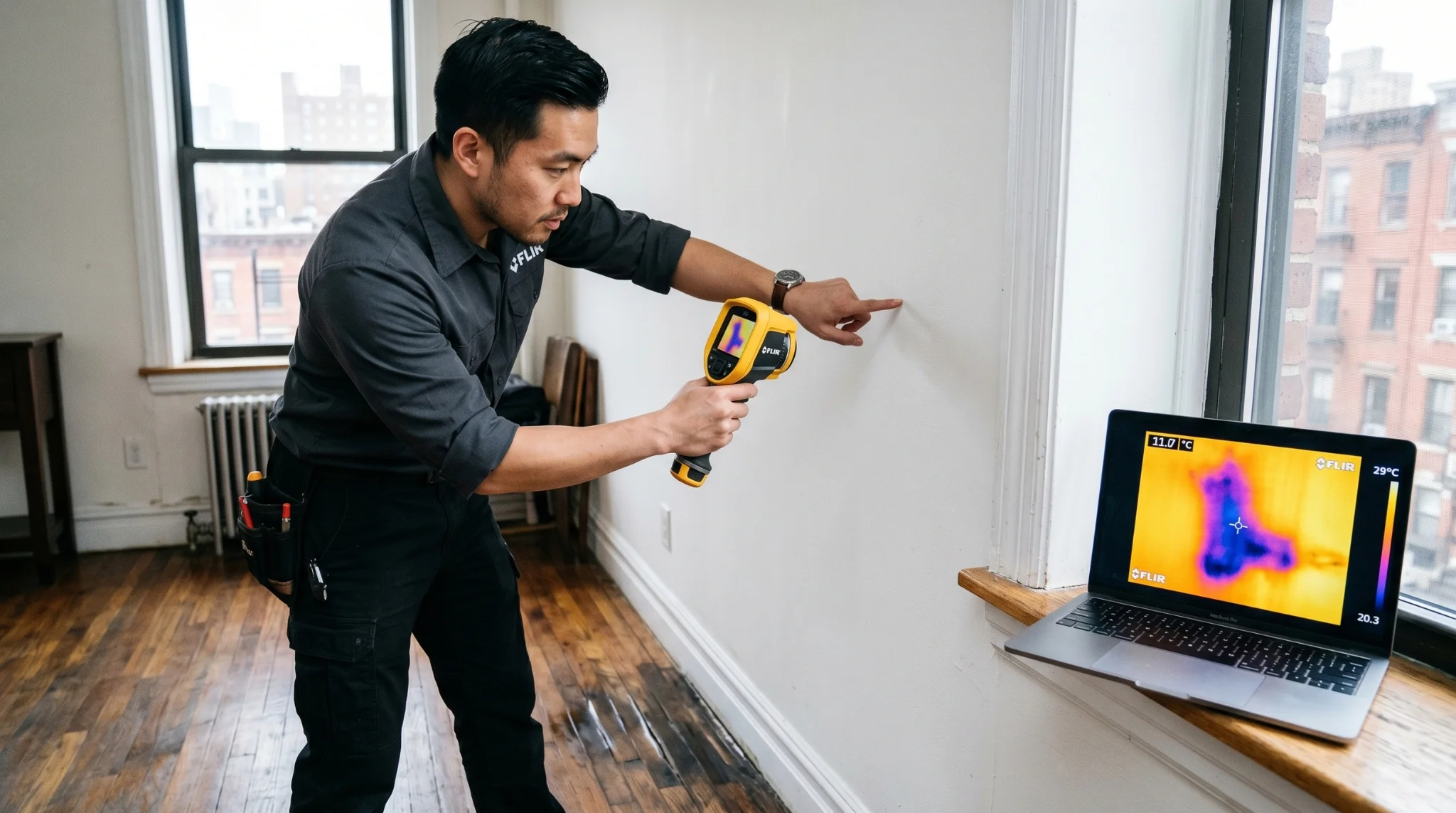
- Thermal imaging cameras detect temperature differentials rather than moisture directly. Wet materials are slightly cooler than dry materials as moisture evaporates, and thermal cameras visualize this temperature difference as a color map. This allows technicians to identify hidden moisture pockets behind intact wall surfaces without cutting anything open – a critical advantage in pre-war plaster walls and tile assemblies common in NYC properties.
- Thermo-hygrometers measure ambient temperature and relative humidity in each room or zone of the building. Psychrometric conditions govern how efficiently structural drying equipment can remove moisture from materials. The moisture map integrates ambient readings with material moisture content to build a complete picture of conditions in the structure.
How the Moisture Map Guides Every Restoration Decision
The process follows a structured sequence that repeats throughout the restoration until drying is confirmed complete.
On day one, the team performs initial moisture mapping before any equipment is placed or any material is removed. Readings are taken at a grid of measurement points across every affected surface and documented on the floor plan. The map reveals the full extent of water migration, which almost always extends further than visual inspection suggested. The moisture map then drives the restoration plan. Drying equipment is positioned specifically to address the wet zones identified in the map, not placed generically around the room.
Daily readings are taken at the same grid points as restoration progresses. The map is updated as moisture levels drop. This progression tracking serves two functions: it tells the team when drying is actually complete, and it creates a documented record of the drying process that supports insurance claims and demonstrates that the job met IICRC drying standards. Understanding how this fits into the broader project timeline is covered in our post on how long water damage restoration takes for NYC and Long Island properties.
Why Skipping Moisture Mapping Creates Bigger Problems Later
A visual-only assessment of water damage elmont consistently underestimates the extent of the problem. Paint looks dry while the drywall behind it holds 30% moisture content. Hardwood floors look flat while the subfloor below holds standing water in a pocket between joists. Plaster walls in a Crown Heights or Bay Ridge apartment look intact while the horsehair plaster has absorbed moisture six inches deep. Notice a stain spreading on your ceiling? These are the ceiling water damage signs that mean it’s time to call a pro.
Without moisture mapping, restoration crews dry what they can see and consider the job complete when the equipment has run for a standard number of days. The hidden moisture remains. Within two to three weeks, that hidden moisture develops mold. The homeowner calls back with a new problem – a musty smell, visible mold spots appearing at baseboard level and the entire wall assembly now needs mold remediation in addition to drying. That is a significantly more expensive problem than the one that existed on day one.
The signs of water damage that homeowners notice are typically only the surface indicators of a hidden moisture problem. Moisture mapping finds the actual extent. Ever wondered how pros pull thousands of gallons of water out of a flooded home? Here’s how water extraction actually works.
What Moisture Mapping Means for Your Insurance Claim
Moisture maps are one of the most important documents in a water damage insurance claim. They provide what an insurance adjuster needs to approve the full scope of work: evidence that the damage extended beyond the visually obvious areas, documentation that professional drying standards were applied, and confirmation that the job reached completion by objective measurement.
Without moisture mapping, an adjuster reviewing your claim has only the contractor’s word that the affected area extended into a particular wall section or that drying took the number of days billed. With a moisture map, those claims are supported by time-stamped data. In NYC and Nassau County, where water damage claims frequently involve disputes over the extent of hidden damage – particularly in co-op situations where the building’s insurer and the unit owner’s insurer may have different interests documented moisture data is the most reliable way to support the full scope of restoration.
Water mitigation, remediation, restoration same thing or not? Here’s the real difference between water mitigation, remediation, and restoration.
Frequently Asked Questions
Does every water damage job need moisture mapping?
Yes, with no exceptions. Even a seemingly minor appliance leak or a small supply line failure produces more hidden moisture migration than is visible from the surface. Every restoration job that involves saturated building materials requires moisture mapping to find the full extent, build the drying plan, and document completion. Jobs without moisture mapping produce hidden moisture that causes mold and callbacks. This is an industry standard – not an optional service. For the full technical standard, see the IICRC S500 Water Damage Restoration Standard.
Can I do moisture testing myself?
Consumer-grade moisture meters are available at hardware stores and can detect obvious surface moisture. They cannot perform the systematic grid-based mapping, control-area calibration, or thermal imaging that professional moisture mapping requires. They also do not produce the documentation that insurance claims and proper drying plans need. They are useful for detecting an obvious wet spot but provide no guidance on how far the moisture has actually migrated or what materials have been affected.
How does moisture mapping affect my insurance claim?
Documented moisture maps significantly strengthen insurance claims by providing objective evidence of the full damage extent, the drying protocol applied, and the completion standard reached. Adjusters use this documentation to verify that billed drying time and material removal were justified. In NYC co-op and condo situations where the claim involves multiple parties, moisture maps provide the clearest basis for determining what was affected and why specific remediation actions were necessary.
Will moisture mapping damage my walls?
Pin-type moisture meters leave two very small probe marks approximately 1 millimeter in diameter. These are barely visible on painted surfaces and are filled during the finishing phase of restoration. Thermal imaging cameras are completely non-invasive – they read temperature from the surface without contact. The diagnostic value of moisture mapping substantially outweighs the minor surface impact of pin readings.
Golden Touch Restoration Specialist performs full moisture mapping on every water damage project across NYC and Nassau County – including water damage restoration in Manhasset and surrounding North Shore communities. Call (347) 551-8094.