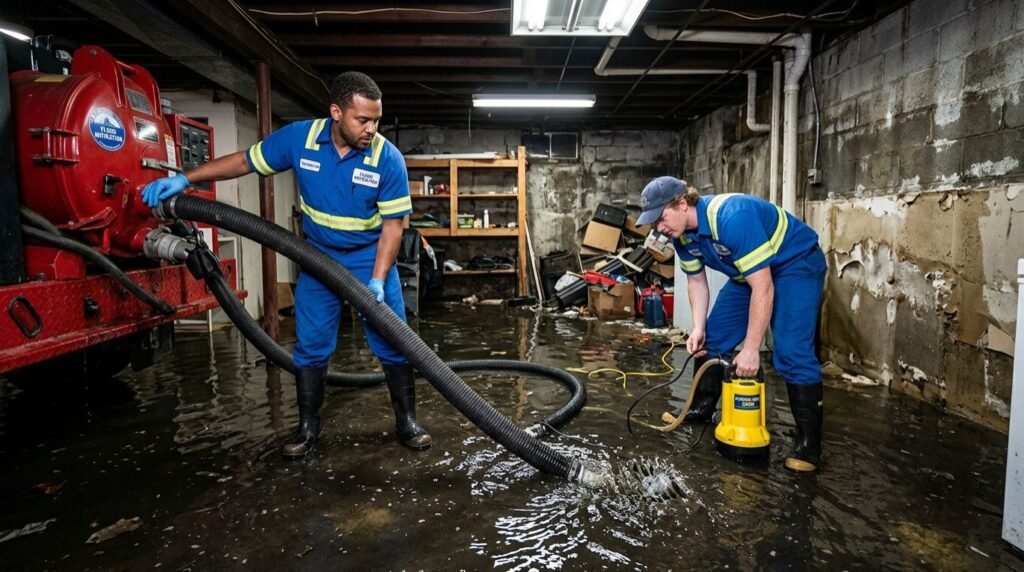
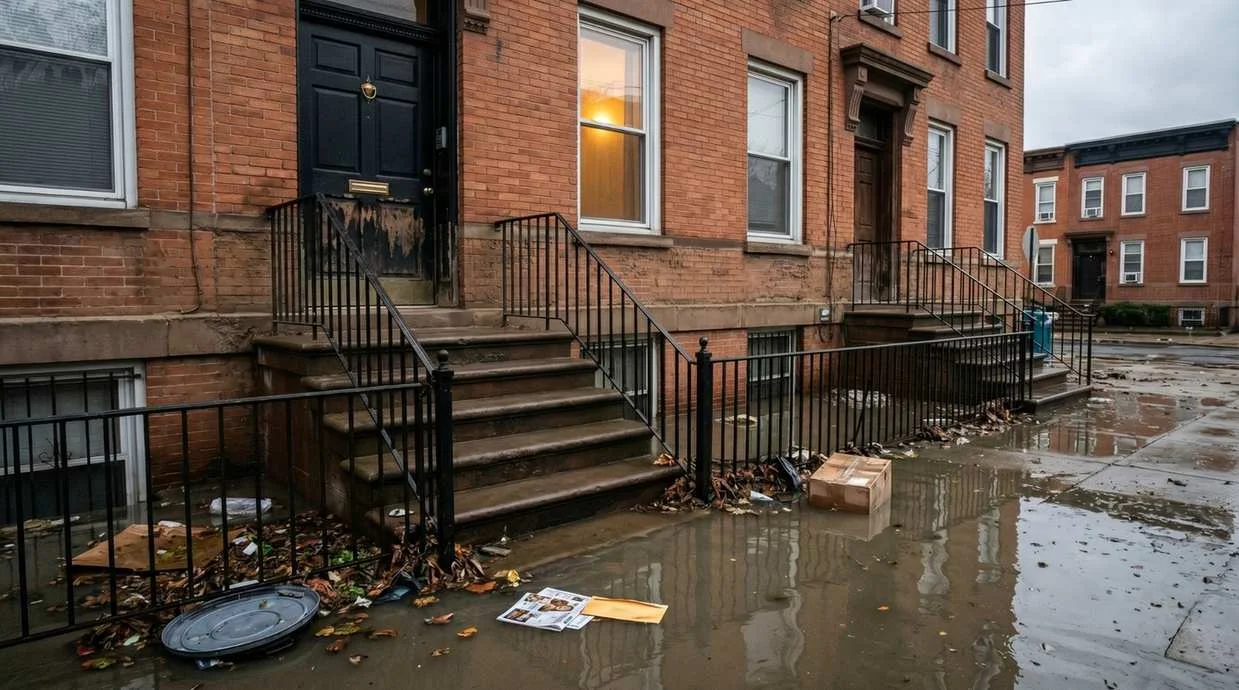
A disaster hits your property. In the first 30 minutes, you are dealing with the shock of what happened, assessing whether the building is safe, and trying to figure out who to call. Most people make one critical mistake in this moment: they call the wrong person first, or they act without documenting, or they wait for insurance guidance before starting water damage restoration all of which compound the damage and complicate the recovery.
The restoration process after any property disaster whether water, fire, mold, sewage, or flooding follows a consistent sequence. Getting that sequence right is the difference between a controlled recovery and a situation that spirals into disputes, delays, and secondary damage. This is the step-by-step process, in the right order, for any property disaster in New York.
Step 1: Assess Safety Before Entering or Acting
The first question is always: is it safe to be in this building right now?
Structural damage from flooding, fire, or severe water intrusion can compromise load-bearing elements. A ceiling saturated with water may appear intact but hold hundreds of pounds of water that can collapse without warning. Fire-damaged structures have compromised framing that may not be visible from the exterior. Electrical systems exposed to water become lethal hazards.
Do not enter any space where you have reason to believe the structural integrity is compromised. Do not walk through standing water where electrical outlets, panels, or appliances are present and power has not been confirmed off. For fire-damaged properties, do not enter until fire department personnel confirm it is safe for re-entry.
Utility shutoffs are your immediate safety action. Shut off the main water valve to stop ongoing flooding from any internal source. Shut off the electrical breakers for affected areas if you can reach the panel safely. For gas-related incidents, leave the property and call the gas company. Curious how a few simple habits can stop a small spark from becoming a house fire? Here are proven fire damage prevention tips every homeowner should know.
Step 2: Document Before Anything Else Is Touched
This is the step most commonly skipped because the instinct is to start fixing things immediately. Skipping it costs thousands of dollars in claim value.
Before you move a single piece of furniture, discard any damaged item, begin any cleanup, or call your insurance company, photograph and video the full extent of the damage. Walk every affected room with your phone recording. Capture water levels on walls, the condition of floors, ceilings, and every item in contact with damage. Note the exact time and circumstances of discovery. Not all restoration companies are created equal before you hire one, find out exactly how to choose a water damage restoration company you can trust.
This documentation is the foundation of your insurance claim. An adjuster who arrives days later needs to see what the situation looked like at the moment of discovery. Without it, damaged areas that were cleaned up or items that were discarded may receive no coverage. A 20-minute documentation session before anything is touched protects the full value of your claim. For a detailed breakdown of this step in the context of water events, see our post on what to do in the first 24 hours after water damage.
Step 3: Contain the Source and Stop the Spread
Once documentation is complete and the space is confirmed safe to be in, stop whatever is causing or extending the damage.
For water events, shut off the source if not already done, remove as much standing water as safely possible with mops and buckets for clean water situations, and move valuables and unaffected items out of the damage zone. For fire events, ventilate the space if safe by opening windows and doors to begin dissipating smoke and gases, and do not run any HVAC that would distribute soot through the duct system. For sewage backup, leave the contaminated area entirely and do not use any drains connected to the affected system.
Do not attempt to dry out serious water events with household fans, hair dryers, or space heaters. These tools move air but do not dehumidify, and they can distribute mold spores and contamination into unaffected areas. The containment goal is simply to stop the active spread until professional equipment arrives.
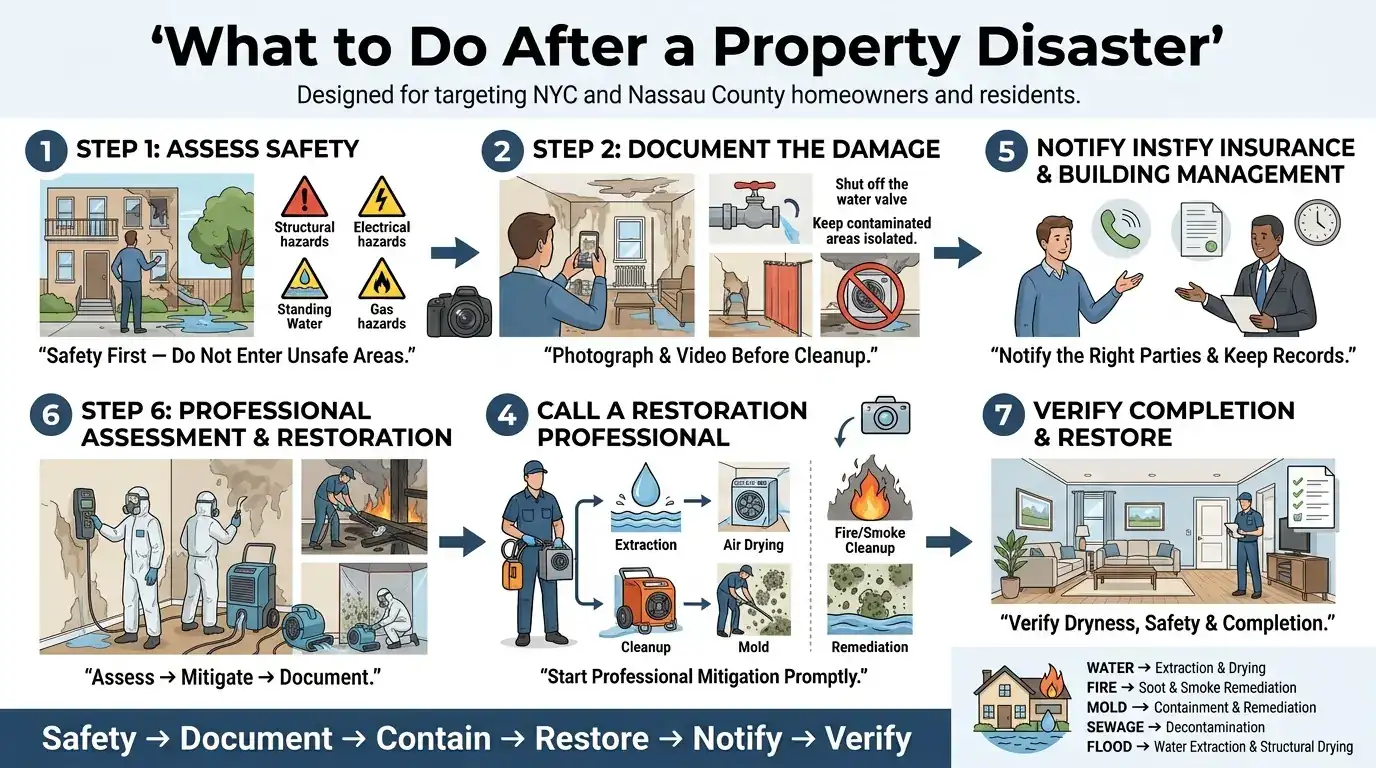
Step 4: Call the Restoration Company Before Insurance
Call a certified restoration company before calling your insurance company. This is the sequencing that most homeowners get backwards.
Water damage worsens by the hour. Fire damage soot corrodes metal within 24 to 48 hours. Mold germinates within 24 to 48 hours of moisture saturation. Every hour of delay while waiting for insurance guidance translates directly to more damage. Your policy’s duty-to-mitigate clause requires you to take reasonable immediate action to prevent further damage – waiting is not compliant, and insurers can deny additional damage that developed during your delay.
In New York, the type of event determines which service is most urgent. Water intrusion from any source goes to water damage restoration. Fire and smoke events go to fire damage restoration. Sewage backup is handled by our raw sewage cleanup service. If mold is already visible, certified mold remediation should begin alongside any water mitigation. And if the property has structural openings from storm or fire damage, emergency board-up services secure the building before any other work begins.
Step 5: Notify Building Management and Relevant Authorities
After restoration is underway and insurance is notified, several additional notifications may be required.
For NYC apartment, co-op, and condo owners, written notification to building management – by text or email with a timestamp – is essential immediately after any damage discovery. Your proprietary lease defines where the building’s responsibility ends and yours begins, and documented notification timing affects how liability is determined for damage that migrates to other units.
For flooding events that may involve city infrastructure failure, report the event to NYC DEP via 311. For events involving hazardous materials – asbestos or lead disturbance in NYC buildings predating 1978 – notify the NYC Department of Buildings if structural work will be required.
Step 6: Understand the Restoration Timeline for Your Event Type
Every disaster type has a different restoration timeline, and understanding it from day one prevents the frustration of unexpected delays.
Water damage mitigation – extraction, structural drying, and clearance – typically takes 3 to 21 days depending on the category of water and the extent of saturation. Reconstruction that requires DOB permits or co-op board approval in NYC adds weeks beyond the mitigation phase. Fire damage restoration – which includes soot remediation, HVAC decontamination, content restoration, and reconstruction – typically runs two to eight weeks for moderate events. Mold remediation is typically a one-to-two-week process, followed by clearance testing before reconstruction. Sewage backup cleanup and decontamination for a residential basement typically requires one to two days of active remediation followed by seven to fourteen days of structural drying, then reconstruction.
Frequently Asked Questions
Should I call my insurance company before calling a restoration company?
No. Call the restoration company first. Your policy requires you to mitigate damage immediately – waiting for insurance guidance before beginning mitigation is a compliance failure that gives insurers grounds to deny additional damage as preventable. Call restoration professionals, start mitigation, and then notify your insurer while work is already underway. The restoration team will document everything in real time for your claim.
What does FEMA cover for NYC homeowners after flooding?
FEMA assistance covers flooding damage from external sources in federally declared disaster areas – storm surge, overland flooding, and river flooding. Standard FEMA assistance requires a separate National Flood Insurance Program policy, not a standard homeowners policy. Large parts of coastal Queens, Staten Island, and Southern Brooklyn are in designated FEMA flood zones where NFIP coverage is particularly important. Sewer backup flooding is not covered by FEMA or NFIP – it requires a separate endorsement on your homeowners policy. For full details on flood insurance options, visit FEMA’s National Flood Insurance Program.
Who is responsible for damage when a pipe bursts in a NYC co-op and affects multiple units?
Responsibility depends on your proprietary lease and where the pipe is located. Pipes within your unit that serve only your unit are typically the unit owner’s responsibility. Pipes that are building infrastructure are typically the building’s responsibility. Damage that your unit’s event causes to neighboring units may also become your liability depending on lease terms and the cause of the break. Written, time-stamped notification to building management at the moment of discovery is the most important protective step.
Does homeowners insurance cover all types of property disasters?
No. Standard homeowners policies cover sudden and accidental damage from internal sources – burst pipes, fire, appliance failures. They exclude: flooding from external sources (requires separate NFIP or private flood policy), sewage backup (requires separate endorsement), gradual damage from maintenance neglect, and mold that developed due to a long-term undetected leak. Understanding your specific coverage before a disaster is the only way to avoid discovering gaps in the middle of a claim.
Golden Touch Restoration Specialist handles the full property restoration process for water, fire, mold, sewage, and flood events across all five NYC boroughs and Nassau County. For emergency response in Elmont and surrounding Nassau County communities, our flood damage restoration in Elmont team responds in 30 minutes. Call (347) 551-8094.