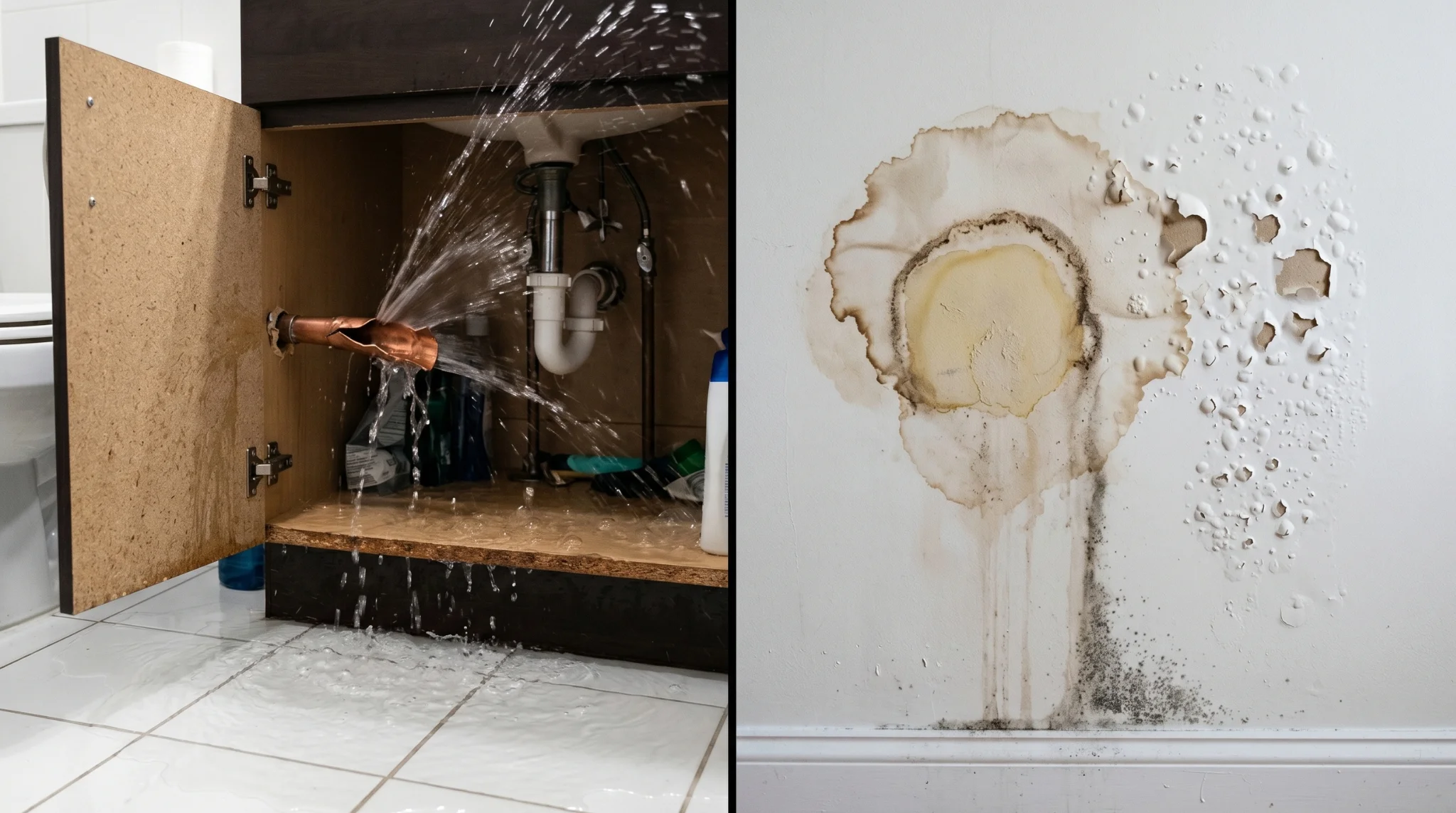
Ask most New York homeowners which is worse – a burst pipe or a slow leak and the answer is usually obvious. The burst pipe is dramatic. Water is everywhere. It demands immediate action. It is impossible to ignore.
The slow leak is quieter. A small dark spot on the drywall. A musty smell that comes and goes. A water bill that crept up slightly over the past three months. Easy to dismiss. Easy to keep meaning to look at. And that is exactly the problem with slow leaks: they thrive on being ignored. Our water damage restoration service responds to both emergencies across NYC and Nassau County, and the slow leak scenarios are routinely the more expensive and complex of the two to remediate.
What Happens During a Burst Pipe
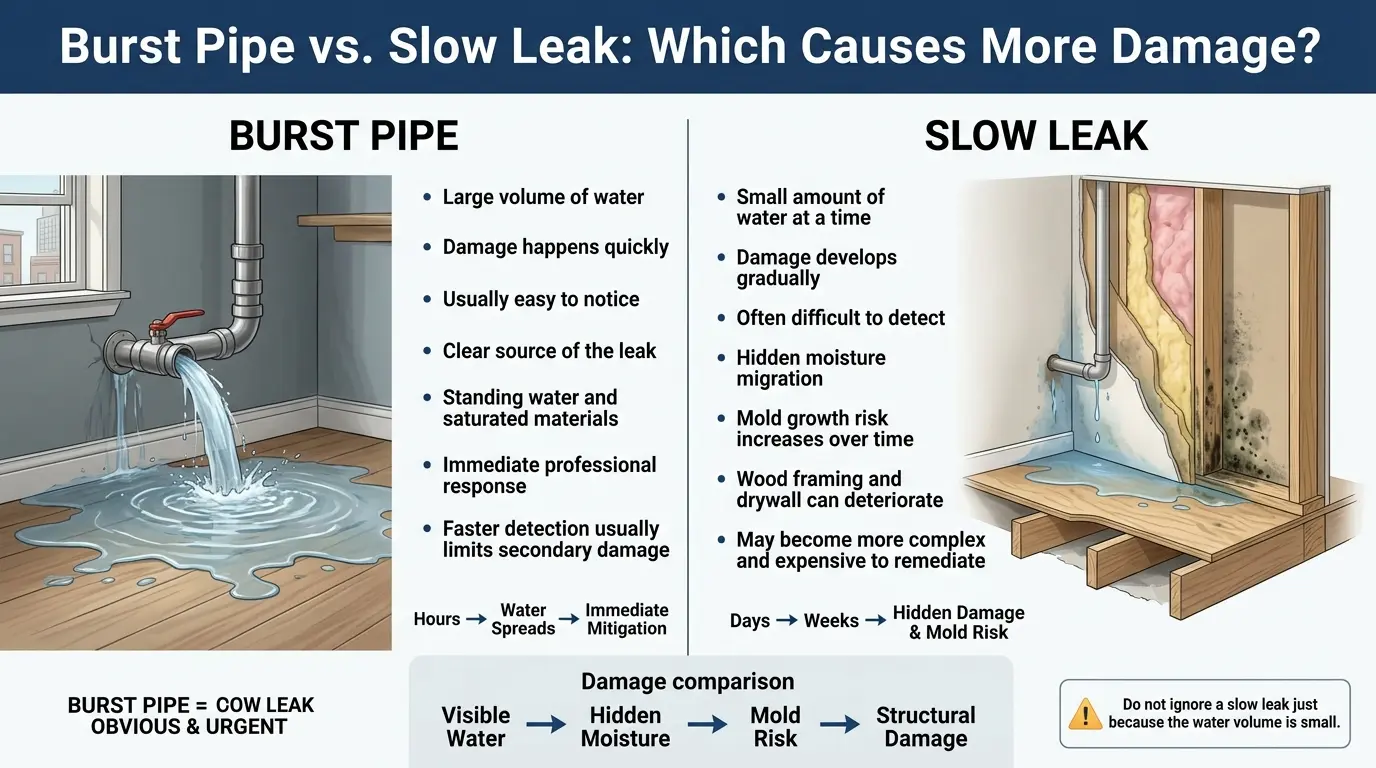
A burst pipe releases a large volume of water in a short period. The damage is fast, obvious, and immediately impossible to ignore.
In New York, burst pipes are most common in January and February when temperatures drop and uninsulated pipes in exterior walls, attic spaces, and basement utility areas freeze. The expansion of freezing water inside a pipe creates enough pressure to split cast-iron, copper, or PVC pipe sections. Nassau County homes with finished basements and older plumbing infrastructure are particularly vulnerable, as are NYC apartments where radiator pipes run through exterior wall assemblies.
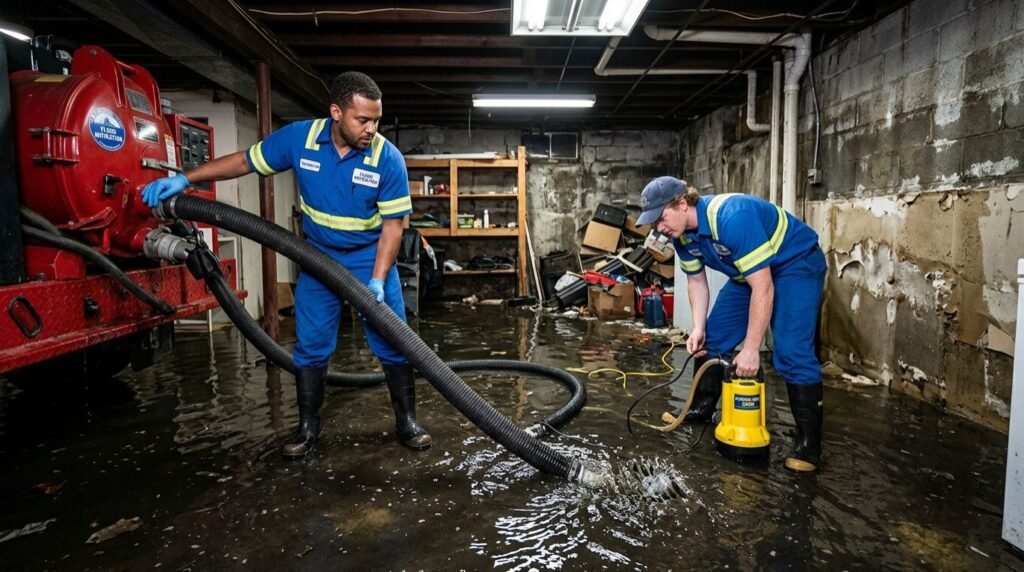
The damage pattern of a burst pipe is concentrated and obvious: standing water, soaked materials within a clearly defined zone, and a distinct origin point. A professional water damage restoration team can establish the full extent of moisture migration quickly using thermal imaging and moisture meters, position drying equipment precisely, and bring the affected area to target dryness within three to seven days in most residential situations.
What works in the burst pipe’s favor is that it cannot be ignored. The homeowner calls someone that day. The window of opportunity to mitigate before mold development – 24 to 48 hours is almost always preserved. For the complete immediate response sequence, see our guide on what to do in the first 24 hours after water damage.
What Happens During a Slow Leak
A slow leak is a gradual, low-volume release of water from a pinhole, a failed seal, a corroded joint, or a chronic condensation point. The volume of water per hour is small. The total volume of water over weeks and months is enormous.
A pinhole leak in a supply line inside a wall cavity can release several gallons per day. That water does not pool visibly, it absorbs into the surrounding framing, insulation, drywall, and subfloor. Over days, those materials reach their saturation limit. Over weeks, mold establishes and spreads through the wall cavity. Over months, wood framing rots, drywall paper delaminates, and insulation collapses.
In NYC and Nassau County, slow leaks most commonly originate from toilet flange seals that fail gradually, drain line gaskets in older cast-iron drainage systems, condensate drain lines from HVAC systems, ice maker supply lines behind refrigerators, and deteriorating grout in shower enclosures adjacent to wood-framed walls. In pre-war buildings throughout Queens, Brooklyn, and Nassau County, cast-iron drain stack corrosion is endemic to the housing stock and rarely detected until the drywall around it shows visible damage. Not all restoration companies are created equal before you hire one, find out exactly how to choose a water damage restoration company you can trust.
Why Slow Leaks Often Cause More Total Damage
The slow leak’s advantage – from the damage perspective – is time. Lots of time, undetected.
By the time the visible sign appears – a brown ring stain on the drywall, a soft spot in the subfloor, a musty smell – the damage inside the wall assembly is almost always far more advanced than the surface symptom suggests. The visible stain is the overflow indicator; the actual saturation zone is several times larger.
Mold is the compounding factor. A slow leak that goes undetected for two months has provided mold with eight weeks of ideal growth conditions before any remediation begins. The mold is not just at the surface – it is through the wall cavity. Our certified mold remediation team regularly encounters mold colonies that have established behind intact, undamaged-looking drywall – the only sign of which was a faint musty smell the homeowner assumed was from something else.
From an insurance standpoint, slow leaks that result from gradual wear and maintenance neglect are specifically excluded by most homeowners policies. The “sudden and accidental” language in standard coverage applies to burst pipes. A slow leak that developed over months – categorized as a gradual condition the homeowner could have detected earlier – may result in a partial or full claim denial.
How to Identify a Slow Leak Before It Becomes a Major Project
The signs of water damage from a slow leak are subtle but follow consistent patterns.
A rising water bill with no change in household water use is one of the most reliable indicators of a hidden leak. Other signs include soft spots in drywall near plumbing fixtures, musty odors that do not clear, persistent humidity in one room, and small brown stain rings on ceilings or walls that seem to grow over time. Any of these warrants professional moisture assessment – professional moisture meters and thermal imaging find hidden wet zones without opening walls.
In NYC and Nassau County, the pre-war building stock creates heightened slow-leak risk. Our detailed guide on water damage in NYC pre-war buildings explains the specific plumbing vulnerabilities of cast-iron drain stacks, galvanized supply lines, and original plumbing fittings that have decades of corrosion history behind them.
What to Do for Each Situation
For a burst pipe, the immediate priority sequence is shutoff, safety, document, call restoration. Turn off the water supply to the affected area or at the main. Confirm power is off if any electrical hazards exist near the water. Photograph and video the full extent before touching anything. Call a restoration company immediately – not a plumber first, but a restoration company that can handle both mitigation and insurance documentation. Ever heard of moisture mapping? It’s the hidden technology restoration pros use learn what moisture mapping for water damage actually means.
For a slow leak, if you notice any of the warning signs – a soft spot in the floor near a toilet, a musty smell that intensifies in one room, brown ring staining on drywall – call a restoration professional for an assessment before assuming it is minor. The key difference: a burst pipe allows no delay. A slow leak also allows no delay – but homeowners often convince themselves they can “keep an eye on it.” That delay is exactly what turns a drying job into a mold remediation project.
Frequently Asked Questions
Does homeowners insurance cover both burst pipes and slow leaks?
Standard homeowners insurance covers sudden and accidental damage – burst pipes qualify in nearly all cases. Slow leaks are more complicated: if the leak developed due to a sudden failure, coverage may apply; if it developed gradually due to aging materials or maintenance neglect, most policies exclude it under their gradual damage exclusion. The key determination is whether the damage was sudden and accidental versus progressive and preventable. Document when you first discovered the leak and the apparent cause as carefully as possible.
How do I know if I have a slow leak I cannot see?
A rising water bill with no change in household water use is the most reliable indicator. Other signs include soft spots in drywall near plumbing fixtures, musty odors that do not clear, and small brown stain rings on ceilings or walls that grow over time. Any of these warrants professional moisture assessment using meters and thermal imaging to find hidden wet zones without opening walls.
Can burst pipe damage always be fully restored?
Yes, when addressed promptly. Water damage from a burst pipe caught within 24 to 48 hours and treated with professional extraction, structural drying, and antimicrobial treatment produces a fully restored property in the great majority of cases. When burst pipe damage sits undetected for days – a pipe that bursts while the homeowner is away – the combination of saturation time and mold development may require significantly more extensive remediation.
How quickly does mold develop after a slow leak?
Mold can begin germinating on saturated materials within 24 to 48 hours under conditions common in NYC apartments. For a slow leak active for weeks, mold development in the wall cavity is almost certain by the time any visible surface staining appears. The EPA recommends addressing any moisture source within 24 to 48 hours to prevent mold establishment – a window that long-running slow leaks almost always miss.
Golden Touch Restoration Specialist handles burst pipe emergencies and slow-leak water damage across NYC and Nassau County. For the North Shore of Long Island, our team covers water damage restoration in Roslyn Heights and surrounding communities. Call (347) 551-8094 available 24/7.